

A decisão OEM versus ODM determina diretamente seu investimento inicial em ferramentas, velocidade de entrada no mercado, e a propriedade legal dos designs físicos da sua marca. Para um novo bolsa cosmética de couro negócios, escolher o caminho de fabricação errado pode levar a custos irrecuperáveis em moldes desnecessários ou à construção de seguidores fiéis para uma linha de produtos que você realmente não controla. Esta não é apenas uma preferência de fornecimento; é uma escolha fundamental que impacta toda a estrutura financeira e jurídica da sua marca.
Este guia fornece a estrutura operacional para fazer essa escolha. Dividiremos os modelos de custo para ferramentas personalizadas versus projetos prontos, compare prazos de produção realistas para cada caminho, e esclarecer as diferenças críticas nos direitos de propriedade intelectual. Considere este o seu procedimento operacional padrão para navegar na decisão de fabricação mais importante que você tomará.
O que OEM e ODM significam na fabricação de bolsas cosméticas de couro
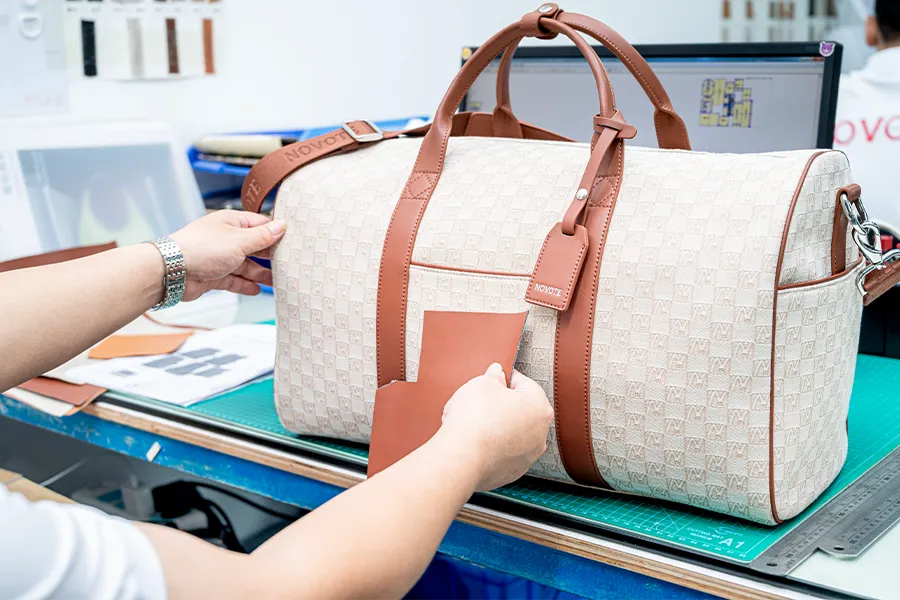
A escolha entre OEM e ODM é uma troca direta: OEM oferece controle total de design e propriedade intelectual para diferenciação da marca, enquanto o ODM fornece velocidade e eficiência de custos, aproveitando, designs não exclusivos.
OEM: Personalização total para a visão da sua marca
Em um fabricante de equipamento original (OEM) modelo, sua marca fornece à fábrica um pacote técnico completo, incluindo desenhos, listas de materiais, e todas as especificações. A função do fabricante é executar sua visão com precisão, produzindo um bolsa cosmética de couro que é exclusivo da sua marca. Essa abordagem coloca você no controle total do produto final, desde sua estrutura central até o menor detalhe.
- Sua empresa mantém total controle e propriedade do design e da propriedade intelectual do produto.
- Esse caminho é construído para marcas com um perfil específico, conceito único que precisa de forte diferenciação de mercado.
- O processo requer um maior investimento inicial em tempo e capital para ferramentas personalizadas, fornecimento de materiais, e amostragem detalhada.
ODM: Acelere a entrada no mercado com designs prontos
O fabricante de design original (ODM) modelo funciona na direção oposta. Aqui, a fábrica oferece um catálogo de pré-desenvolvidos desenhos de bolsas que estão prontos para produção. Sua empresa seleciona um estilo deste catálogo e depois aplica sua marca, como um logotipo, cores personalizadas, ou pequenas alterações de hardware. É um caminho simplificado para colocar um produto no mercado rapidamente.
- Essa abordagem reduz drasticamente o cronograma de lançamento e reduz os custos iniciais de projeto e desenvolvimento.
- É uma solução prática para empresas que priorizam a eficiência e rapidez orçamentária em detrimento da exclusividade do produto.
- O design da bolsa principal não é exclusivo, o que significa que os concorrentes podem adquirir e vender um produto quase idêntico da mesma fábrica.
Escolhendo um modelo: Equilibrando exclusividade e eficiência
A decisão entre OEM e ODM se resume aos seus principais objetivos de negócios. Você deve pesar o valor a longo prazo de um produto completamente único em relação às vantagens imediatas de um produto mais rápido., processo de produção mais econômico. Não existe uma única resposta correta; o modelo certo depende inteiramente da estratégia da sua marca, recursos, e posição no mercado.
- OEM é o caminho para construir o valor da marca a longo prazo através de produtos exclusivos, produtos defensáveis.
- ODM permite testar a demanda do mercado rapidamente com risco financeiro significativamente menor.
- Muitas marcas de sucesso começam com ODM para lançar suas coleções iniciais e depois mudam para OEM à medida que expandem e definem seu nicho de mercado.
Prós e contras da fabricação de marca própria OEM
O modelo OEM oferece controle de design e propriedade intelectual incomparáveis, construir um forte fosso competitivo ao custo de capital inicial significativo e prazos de desenvolvimento mais longos.
Vantagem: Controle total sobre design e propriedade intelectual
Fabricação OEM dá à marca propriedade total das especificações de seu produto, desde o grau exato do couro e acabamento das ferragens até o projeto estrutural final. Esta abordagem garante que o produto seja verdadeiramente único e protege a propriedade intelectual da marca. O fabricante está contratualmente vinculado e não pode vender o mesmo design personalizado aos concorrentes, criando uma vantagem de mercado durável.
- Permite personalização profunda para atender às demandas específicas do mercado e alinhar-se com a identidade da marca.
- Garante direitos exclusivos sobre o design do produto, que é um ativo fundamental.
- Permite o desenvolvimento de moldes proprietários, características, e combinações de materiais que os concorrentes não conseguem replicar facilmente.
Vantagem: Diferenciação de marca e percepção de qualidade mais fortes
Ao dirigir todo o processo de fabricação, as marcas podem impor seus próprios padrões de qualidade rígidos e construir uma reputação de produtos premium. Este controle é vital para o sucesso em segmentos de mercado de nicho ou de alto padrão, onde a qualidade percebida impacta diretamente o poder de precificação. Em vez de aceitar os padrões padrão de um fornecedor, você define e monitora seus próprios padrões de qualidade, desde a origem da matéria-prima até a inspeção final. Isso cria um produto único que se destaca dos produtos padronizados, bens do mercado de massa e ajuda a justificar um preço de varejo mais alto com base em habilidade superior e design exclusivo.
Desvantagem: Maior investimento inicial e prazos mais longos
Criar um produto do zero requer um investimento inicial significativo em pesquisa, desenvolvimento, e ferramentas. O cronograma desde o conceito inicial até um produto pronto para o mercado também é consideravelmente mais longo do que a seleção de um design pré-existente. Seu capital fica vinculado ao desenvolvimento por meses antes que qualquer receita seja gerada.
- Custos iniciais para moldes personalizados, ferramentas, e múltiplas rodadas de amostragem podem ser substanciais.
- O projeto completo, amostragem, e o ciclo de validação pode levar vários meses antes que a produção em massa possa começar.
- O risco financeiro é maior, já que você arca com o custo total de um design que ainda não foi testado no mercado.
Desvantagem: Maior Gestão e Complexidade Operacional
Em um modelo OEM, a marca é responsável por fornecer especificações técnicas precisas e gerenciar ativamente o controle de qualidade. Isso adiciona complexidade operacional e coloca o fardo da validação do projeto diretamente sobre sua equipe. O risco de erros de produção aumenta se os pacotes técnicos e as especificações não forem perfeitamente claros, levando a atrasos dispendiosos ou estoque defeituoso. Este modelo exige que uma marca invista tempo e recursos significativos na comunicação com o fornecedor, supervisão de produção, e garantia de qualidade, muitas vezes necessitando de uma equipe interna ou especialista com experiência direta em fabricação e gerenciamento da cadeia de suprimentos.
Expanda sua marca com bolsas de cosméticos personalizadas
Prós e contras da fabricação de design original ODM
O modelo ODM oferece velocidade de lançamento no mercado incomparável e custos iniciais mais baixos, sacrificando a exclusividade do design e a propriedade intelectual.
Vantagens: Entrada mais rápida no mercado e custos mais baixos
O modelo ODM permite que as marcas lancem novos produtos rapidamente usando designs pré-desenvolvidos e processos de fabricação estabelecidos. Esta abordagem reduz significativamente a barreira financeira à entrada, uma vez que elimina a necessidade de grandes investimentos iniciais em pesquisa, projeto, e ferramentas.
- Os produtos podem estar prontos para venda em alguns meses, uma vez que os projetos já foram testados e as linhas de produção estão definidas.
- As empresas evitam os altos custos associados ao desenvolvimento de produtos originais, prototipagem, e criando novos moldes.
- Um parceiro ODM experiente fornece qualidade confiável e acesso imediato a uma cadeia de suprimentos estabelecida.
- Economias de escala são alcançadas porque o mesmo design central é usado para vários clientes, levando a custos de produção por unidade mais baixos.
Desvantagens: Diferenciação limitada e propriedade de design
A principal desvantagem do ODM é o potencial de exclusividade limitada do produto. Ao avaliar fornecedores, nosso guia sobre encontrar um fabricante confiável pode ajudar, já que outras marcas podem vender itens semelhantes do mesmo fabricante. Os parceiros também não possuem a propriedade intelectual do design principal, que pode criar dependência e limitar a exclusividade.
- Como várias empresas podem usar um design básico semelhante, as marcas devem contar com marketing e pequenas personalizações para se destacar.
- Os clientes têm menos controle direto sobre o processo de produção e dependem do controle de qualidade e da programação do fabricante..
- Os direitos de propriedade intelectual do design original permanecem com o ODM, dificultando a mudança de fabricante com o mesmo produto.
- Depender inteiramente de um parceiro ODM pode criar vulnerabilidades se suas operações enfrentarem interrupções.
Custo: Ferramentas personalizadas versus projetos prontos
A relação custo-benefício de ferramentas personalizadas versus projetos prontos depende de uma análise do ponto de equilíbrio, onde o elevado investimento inicial em moldes OEM é compensado por custos unitários mais baixos quando a produção ultrapassa um volume crítico, tipicamente 500 para 1,000 unidades.
Investimento inicial para moldes personalizados
Ferramentas personalizadas para um produto OEM exigem um investimento inicial significativo. Para uma análise completa dos preços, veja nosso guia em custos de bolsa de couro personalizada. Este capital cobre a engenharia, prototipagem, e fabricação de moldes e ferragens exclusivos necessários para o design exclusivo de sua bolsa de cosméticos. Os custos podem variar de alguns milhares a dezenas de milhares de dólares, dependendo da complexidade da ferramenta e dos materiais utilizados.. Este investimento não é negociável para marcas que buscam um produto exclusivo, pois cria uma barreira à entrada de concorrentes e protege a integridade do design no mercado.
| Fator de custo | OEM (Ferramentas personalizadas) | ODM (Design pronto) |
|---|---|---|
| Investimento Inicial | Alto (Por exemplo, $3,000 – $80,000+ dependendo da complexidade) | Nenhum ou mínimo (os custos são amortizados pela fábrica) |
| Custo por unidade (em escala) | Mais baixo, devido a materiais otimizados e automação. | Mais alto, já que as ferramentas são generalizadas e não otimizadas. |
| Volume ideal | Alto volume (tipicamente >500–1.000 unidades) | Volume baixo, testes de mercado, ou execuções iniciais do produto |
Custos de produção por unidade
Embora as ferramentas personalizadas tenham um preço inicial alto, quase sempre leva a custos unitários mais baixos durante a produção em grande escala. Moldes personalizados são projetados especificamente para o seu produto, otimizando a eficiência do material, reduzindo o desperdício, e permitindo a montagem automatizada. Essa precisão reduz os custos de material e mão de obra ao longo do tempo. Projetos ODM prontos evitam taxas de ferramentas, mas geralmente têm preços unitários mais altos porque dependem de recursos existentes., ferramentas generalizadas que não são perfeitamente adequadas para um único produto, resultando em uso menos eficiente de materiais e mão de obra.
O papel do volume de pedidos
A decisão final sobre ferramentas geralmente depende do volume projetado do pedido. Há um claro ponto de equilíbrio onde o alto custo inicial das ferramentas personalizadas se torna mais econômico. Este ponto de inflexão normalmente fica entre 500 e 1,000 unidades. Para pequenos lotes ou testes de validação de mercado, o menor risco financeiro de projetos ODM prontos é a escolha lógica. Para grandes, pedidos em andamento, o menor custo por unidade alcançado com ferramentas OEM personalizadas oferece valor superior a longo prazo e justifica a despesa inicial. Algumas marcas também usam uma abordagem híbrida, combinando elementos personalizados com componentes prontos para equilibrar custos, velocidade, e diferenciação.
Tempos de entrega: O que esperar de OEM e ODM
Os prazos de fabricação OEM são medidos em meses ou até um ano devido ao desenvolvimento personalizado, enquanto o ODM aproveita projetos pré-construídos para acelerar a entrada no mercado em apenas alguns meses.
Cronogramas do projeto OEM
Projetos OEM criam um produto personalizado desde o início, o que requer um cronograma muito mais longo. O processo é carregado com design, criação de ferramentas, fornecimento de materiais, e validação antes mesmo que a produção em massa possa começar. Estas fases iniciais são as mais demoradas porque cada detalhe é novo e precisa de verificação.
- O projeto, prototipagem, e as fases de validação consomem mais tempo, pois cada componente e especificação é exclusivo para o seu produto.
- Criar moldes e ferramentas personalizados é uma tarefa significativa, processo único que adiciona semanas ou meses ao prazo de entrega do primeiro pedido.
- Do conceito inicial à entrega final, um projeto OEM normalmente leva 6 para 12 meses, e pode se estender ainda mais para produtos altamente complexos.
Cronogramas do Projeto ODM
O ODM fornece um caminho mais rápido para o mercado porque se baseia na experiência existente do fabricante., designs de produtos pré-validados. Com a engenharia e as ferramentas principais já implementadas, o ciclo de desenvolvimento é drasticamente reduzido. A personalização é limitada à marca, cores, e materiais, o que permite um processo simplificado.
- Como o design e as ferramentas fundamentais existem, a fase de desenvolvimento é mínima, ignorando meses de R&D.
- As principais tarefas envolvem a finalização de customizações cosméticas e aprovação de amostras de produção.
- Esta abordagem eficiente permite a entrada no mercado em tão pouco tempo 1-3 meses, um nítido contraste com o cronograma do OEM.
Fatores que influenciam a velocidade de produção
Diversas variáveis podem afetar prazos de fabricação para modelos OEM e ODM. Uma compreensão clara desses fatores é fundamental para planejar cronogramas de produção e gerenciar expectativas. Atrasos em qualquer área podem ter um efeito cascata em todo o cronograma do projeto.
- A disponibilidade de materiais e as dependências de fornecedores podem criar atrasos significativos, especialmente para componentes de origem personalizada em projetos OEM.
- A complexidade dos protocolos de controle de qualidade e dos procedimentos de teste pode acrescentar um tempo considerável à fase de produção.
- O cronograma e a capacidade de produção atuais do fabricante influenciam diretamente a rapidez com que eles podem iniciar e concluir um novo pedido.
Propriedade intelectual e propriedade de design em cada modelo
Com um modelo OEM você possui toda a propriedade intelectual do design, mas em um modelo ODM o fabricante mantém a propriedade do design principal enquanto você possui apenas sua marca.
OEM: O cliente retém o IP completo do projeto
Em uma parceria OEM, você fornece o design completo do produto. Para contexto em OEM e ODM na fabricação de malas, veja nosso guia relacionado, especificações técnicas, e projetos de ferramentas. Isso significa que você retém direitos totais e exclusivos de propriedade intelectual sobre o produto final. Este modelo dá à sua marca uma vantagem competitiva única e evita que o fabricante venda legalmente o seu design exato para outras empresas. É o padrão para empresas com R interno estabelecido&Equipes D que desenvolveram recursos de produtos proprietários.
ODM: Fabricante mantém IP de projeto básico
Sob o modelo ODM, a fábrica possui a propriedade intelectual do design do produto principal, moldes, e estrutura interna. Sua propriedade é limitada aos ativos de sua marca, como logotipos e quaisquer modificações cosméticas que você financiou especificamente, como uma cor exclusiva ou acabamento de material. O fabricante pode oferecer legalmente o design da sacola base para vários clientes, o que reduz o R&D pesa para você, mas não oferece exclusividade de design no mercado.
| Aspecto de propriedade de IP | Modelos OEM (Seu projeto) | Modelo ODM (Projeto de fábrica) |
|---|---|---|
| Design de produto principal | O cliente possui 100% do IP. | O fabricante possui o IP do projeto básico. |
| Ferramentas e Moldes | O cliente é proprietário das ferramentas que financiou. | O fabricante possui todas as ferramentas existentes. |
| Marcas e logotipos | O cliente possui todos os elementos da marca. | O cliente possui todos os elementos da marca. |
| Exclusividade de design | Garantido por contrato. | Nenhum. O design básico pode ser vendido aos concorrentes. |
Acordos contratuais para prevenir disputas de propriedade intelectual
Independentemente do modelo de fabricação que você escolher, é necessário um acordo detalhado para definir claramente a propriedade da PI. Este contrato deve indicar explicitamente quem é o proprietário do projeto original, quaisquer modificações subsequentes, e as ferramentas associadas. Colocar isso por escrito é a única maneira de proteger o seu negócio e evitar disputas caso a parceria termine.
- Define claramente a propriedade do design principal e de quaisquer personalizações.
- Ajuda a evitar disputas sobre ferramentas e moldes caso você troque de fornecedor.
- Especifica termos para componentes compartilhados ou tecnologias pré-existentes usadas no produto.
Quando mudar de OEM para ODM (ou misture ambos) conforme você escala
Dimensionar de forma eficaz não significa abandonar um modelo de produção por outro; trata-se de combinar estrategicamente OEM para produtos que definem a marca e ODM para expansão e agilidade do mercado.
Manutenção do OEM para a identidade principal da marca
Para uma marca em crescimento, o modelo OEM continua a ser a base para produtos emblemáticos que definem a sua posição no mercado. Esta abordagem garante controle total sobre o design, Materiais, e execução final, que não é negociável para coletas de assinaturas. Ao reter a propriedade total da propriedade intelectual, você constrói uma vantagem competitiva defensável e garante que o produto que chega ao cliente seja um reflexo direto dos padrões da sua marca.
- Manter a propriedade total de designs exclusivos e propriedade intelectual.
- Garanta a diferenciação do produto para altas margens, coleções de assinaturas.
- Manter rigoroso controle de qualidade sobre materiais e artesanato que reflitam os padrões da marca.
Mudando para ODM para velocidade e expansão de mercado
Uma mudança estratégica em direção a um modelo ODM torna-se prática quando o objetivo principal é a rápida entrada no mercado, testando novas categorias, ou otimizar custos. Aproveitando a capacidade existente de um fabricante, designs pré-avaliados permitem que você expanda seu catálogo de produtos rapidamente sem o investimento inicial significativo em pesquisa, desenvolvimento, e ferramentas. Isto torna o ODM uma ferramenta poderosa para responder às tendências do mercado ou capturar segmentos orientados por volume, onde a velocidade e o preço são os principais impulsionadores.
- Lançar novas linhas de produtos mais rapidamente usando os designs existentes do fabricante.
- Reduza a sobrecarga de desenvolvimento interno e os custos associados.
- Atenda com eficiência a demanda do mercado por segmentos de produtos orientados ao volume ou sensíveis ao preço.
Usando uma estratégia híbrida para um crescimento equilibrado
A estratégia de expansão mais sofisticada envolve uma abordagem híbrida que equilibra integridade da marca com agilidade operacional. Isso significa usar OEM para o seu núcleo, produtos de alto valor que oferecem valor premium e definem sua marca. Ao mesmo tempo, você aproveita o ODM para introduzir acessórios complementares, testar itens sazonais, ou lançar-se em mercados adjacentes com menor risco e desembolso de capital. Este modelo dual-track permite atender diversos segmentos de clientes, combinando recursos exclusivos, produtos específicos da marca com boa relação custo-benefício, soluções prontas.
- Desenvolva produtos emblemáticos via OEM para comandar uma posição de marca premium.
- Use ODM para introduzir acessórios complementares ou itens sazonais com menor risco.
- Atender diversos segmentos de mercado combinando, produtos específicos da marca com boa relação custo-benefício, soluções prontas.
Conclusão
A escolha entre a fabricação OEM e ODM define o caminho do seu produto até o mercado. Cada modelo apresenta um equilíbrio de custo diferente, velocidade, e controle criativo. Fazer a escolha certa alinha sua estratégia de produção com seus objetivos de negócios de longo prazo para sua linha de bolsas de cosméticos.
Avalie as necessidades imediatas da sua marca em termos de propriedade do design, orçamento, e velocidade de lançamento para determinar seu melhor ajuste. Quando você estiver pronto para explorar as opções de fabricação, nossa equipe pode ajudá-lo a revisar nosso catálogo ODM ou planejar seu projeto OEM personalizado.
Perguntas frequentes
Qual é a diferença entre OEM e ODM?
Em OEM (Fabricante de equipamento original), você fornece o completo, design personalizado e especificações para uma fábrica para produção exclusiva, e você possui a propriedade intelectual. Em ODM (Fabricante de design original), você seleciona um design de produto pré-existente no catálogo da fábrica e aplica sua marca a ele. A fábrica possui o IP de design básico.
O OEM é mais barato que o ODM?
Não, ODM é normalmente mais barato que OEM. Com ODM, o fabricante já cobriu a pesquisa, desenvolvimento, e custos de ferramentas para seus projetos existentes. Em um acordo OEM, a marca é responsável por esses investimentos iniciais significativos, tornando-o um processo mais caro, especialmente para execuções iniciais de produção.
Eu possuo o design em ODM?
Não, você não possui o design principal em um arranjo ODM. O fabricante retém a propriedade intelectual (PI) para o design original do produto. Você possui os direitos sobre suas personalizações específicas, como seu logotipo, cores da marca, e embalagem, mas o fabricante pode vender o mesmo produto base para outras marcas.
Qual é o MOQ para OEM vs ODM?
Projetos OEM normalmente têm uma Quantidade Mínima de Pedido muito maior (MOQ) do que ODM. Isso ocorre porque o OEM exige ferramentas personalizadas e configuração de produção dedicada, que precisa de um pedido grande (muitas vezes 1,000-10,000+ unidades) ser viável. Os produtos ODM já estão em produção, para que os fabricantes possam oferecer MOQs mais baixos (tipicamente 100-1,000 unidades) pois estão simplesmente adicionando marca a um processo existente.
Posso personalizar um design ODM?
Sim, a personalização é o principal benefício do modelo ODM, embora geralmente seja limitado a mudanças no nível da superfície. Personalizações comuns incluem a aplicação do logotipo da sua marca, mudando as cores do produto, usando materiais diferentes de uma lista pré-aprovada, e projetando embalagens personalizadas. Normalmente não são possíveis grandes mudanças na estrutura central do produto.
Quanto tempo leva a amostragem ODM?
A amostragem ODM é significativamente mais rápida que a OEM. Porque o produto principal já está desenvolvido, o processo geralmente envolve a aplicação de sua marca e especificações de cores a um design existente. Normalmente você pode esperar receber uma amostra ODM dentro 1 para 3 semanas, dependendo da complexidade de suas personalizações e da programação do fabricante.