

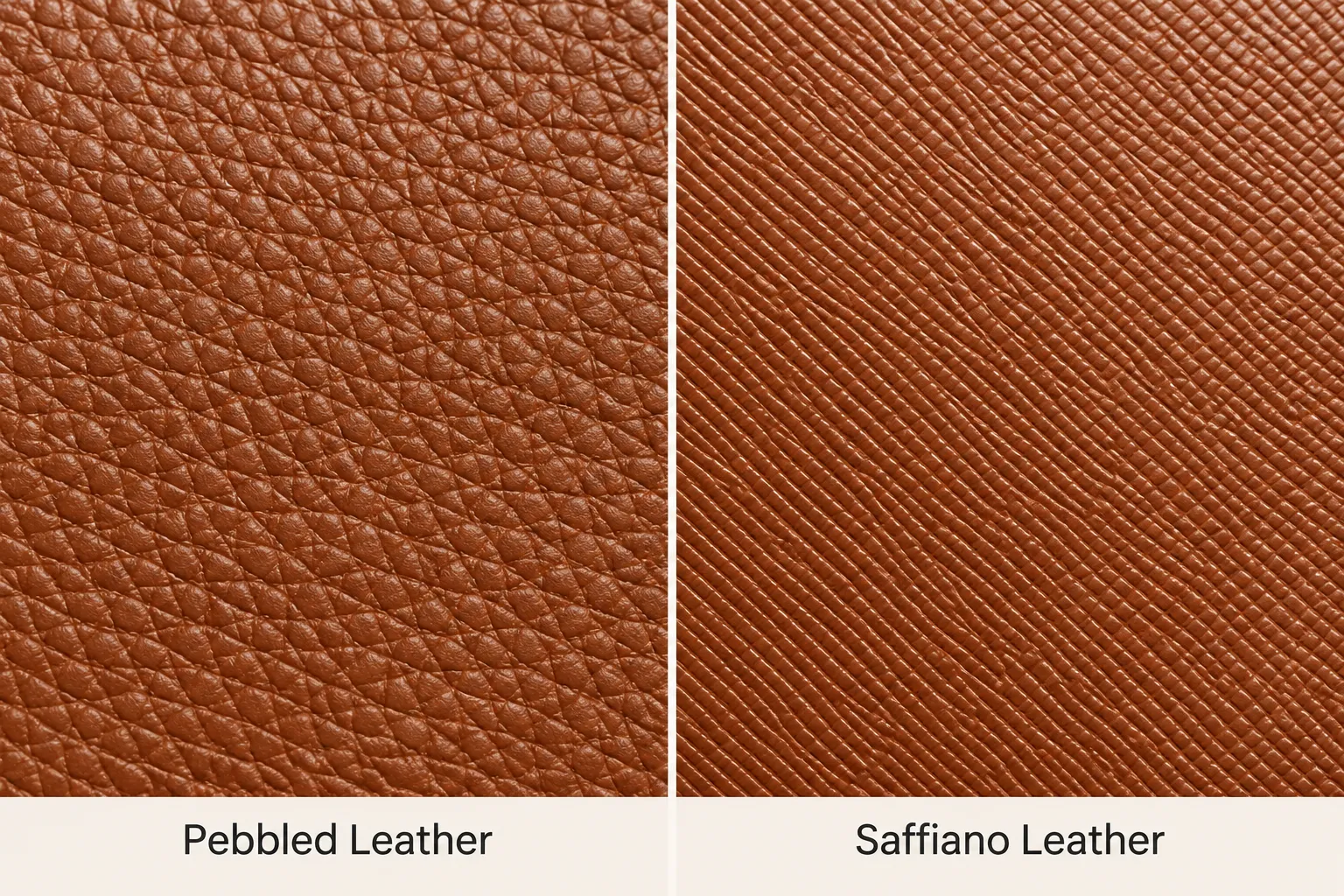
Pebbled leather and Saffiano leather are two of the most recognizable textured finishes in the bag industry. Both start as smooth hides, but the finishing process creates dramatically different surfaces: one soft and irregular, the other crisp and geometric. If you are sourcing leather for a bag line, this choice affects more than aesthetics. It also shapes production cost, minimum order quantities, and the care instructions you pass to your customers.
What Is Pebbled Leather?
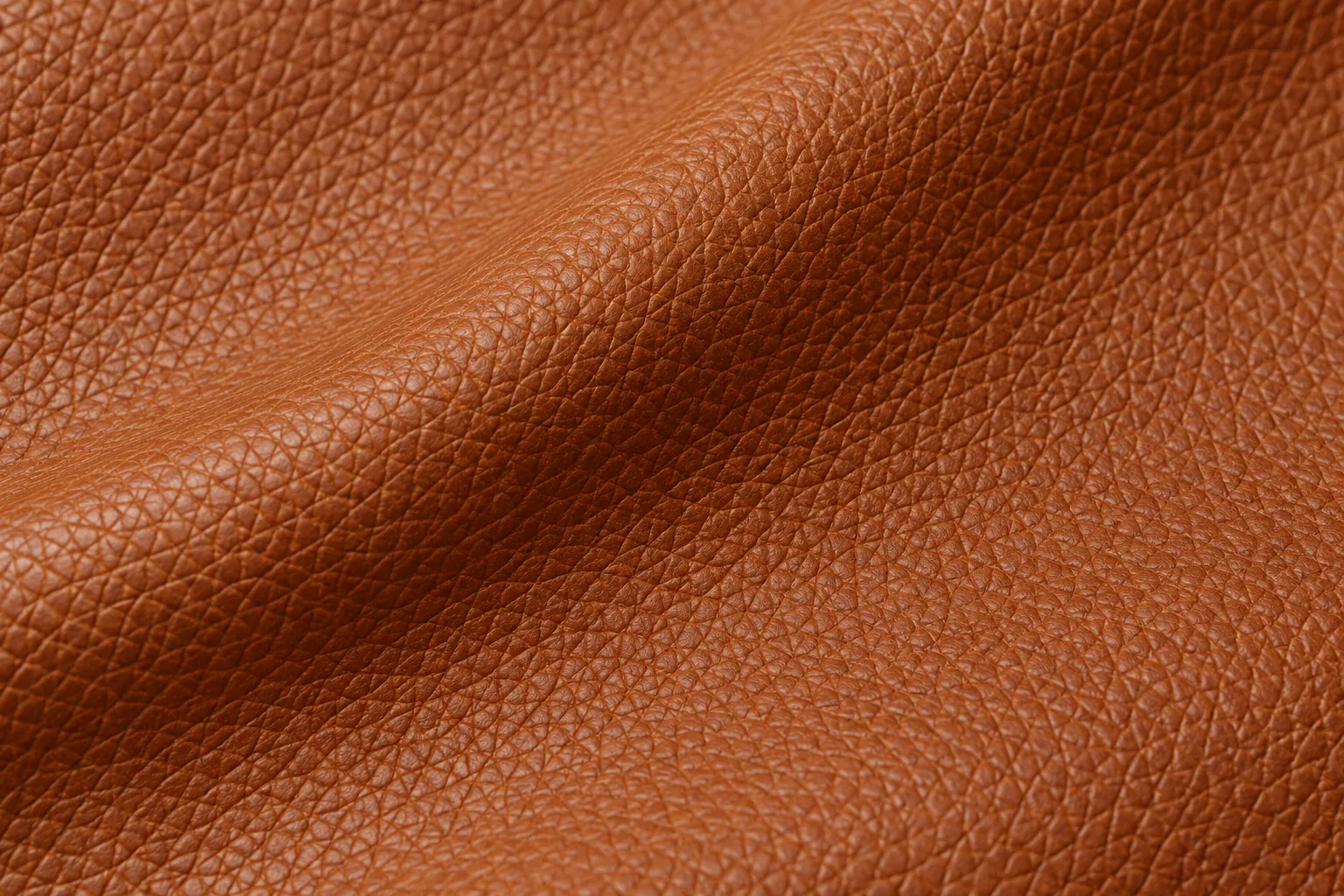
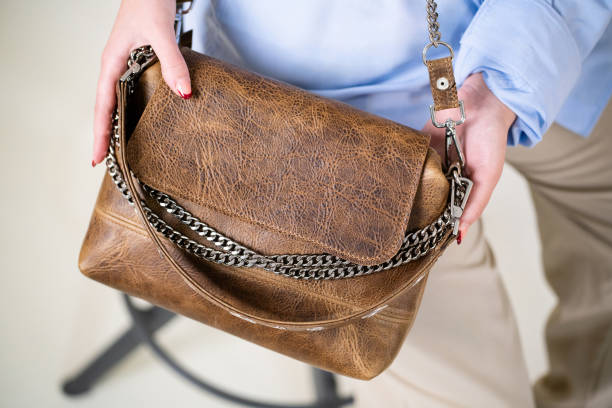
Pebbling hides imperfections and adds grip, which is why it suits bags meant to be handled daily.
Pebbled leather is any leather that has been embossed with a raised, rounded pattern resembling small pebbles or gravel. The texture is created by pressing the leather against a heated metal plate engraved with a pebble grain design. The result is a surface covered in soft, irregular bumps that give the leather a casual, tactile quality.
The base leather can be full-grain, grão superior, or even split leather. Full-grain pebbled leather retains the natural fiber structure beneath the embossed pattern, making it stronger and more durable. Split leather pebbled versions are cheaper but lack the tensile strength needed for bag panels that bear weight. The embossing process itself does not weaken the leather significantly: it compresses the surface fibers but leaves the body intact.
Brands that use pebbled leather prominently include Coach (their “Glovetanned Pebble” e “Signature Pebble” lines), Tory Burch, and Kate Spade. In the manufacturing world, pebbled leather is favored for bags that need to look substantial without requiring flawless hides: the texture hides minor surface imperfections that would be visible on smooth leather.
What Is Saffiano Leather?
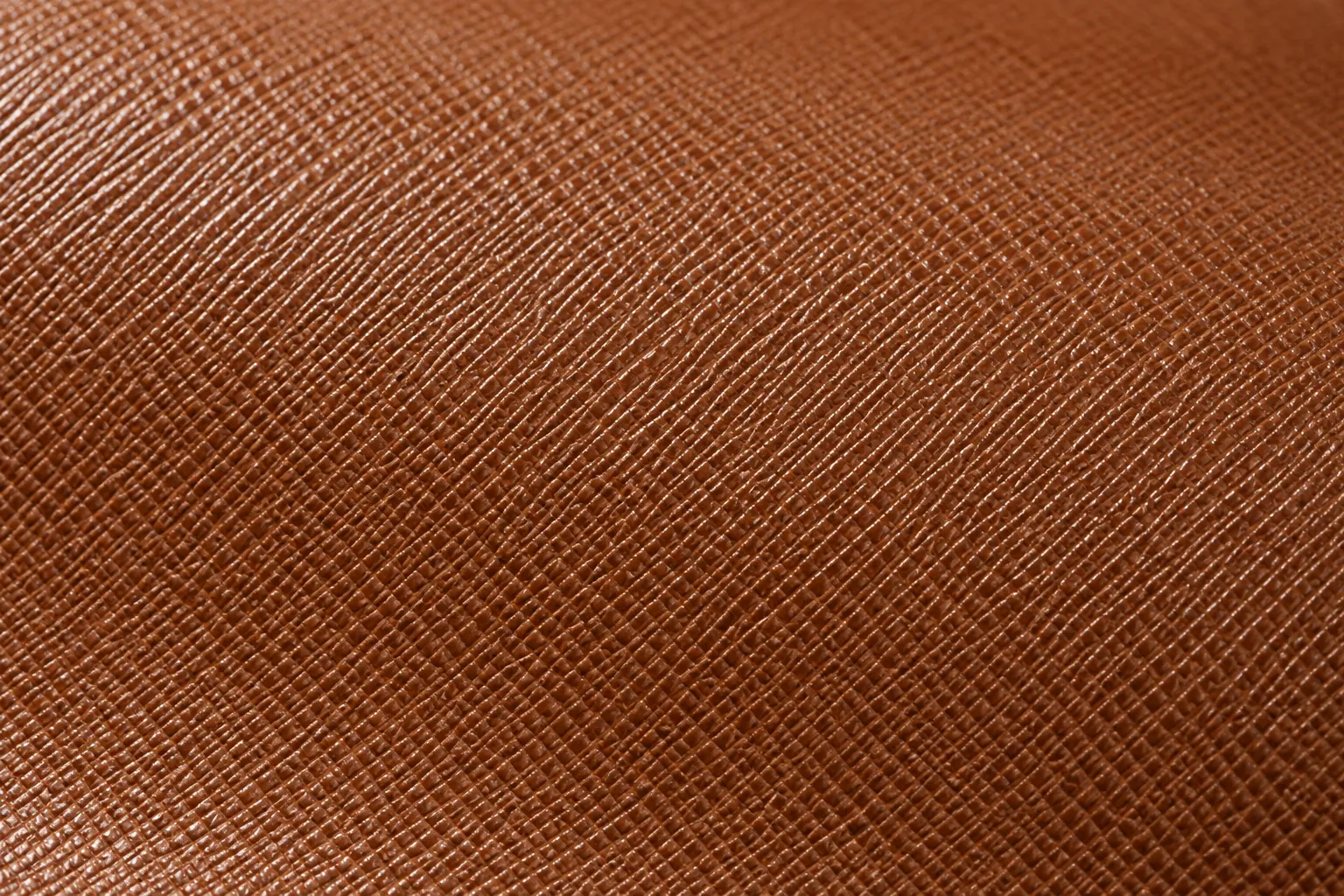
Saffiano trades patina for protection, giving structured bags a surface that stays new-looking for years.
Saffiano leather is defined by its crosshatch pattern: fine diagonal lines that intersect at angles, creating a grid-like texture. The technique was originally introduced by Prada and was achieved by pressing a patterned metal plate into a wax coating applied to the leather surface. The wax fills the pressed lines, creating the characteristic crosshatch while also forming a protective layer.
Modern Saffiano production follows a similar principle but at industrial scale. The leather (usually calfskin) is first chrome-tanned for softness and color consistency. A wax or polyurethane coating is then applied, and the crosshatch pattern is hot-pressed into the coating under heat. The result is a surface that is extremely resistant to scratches, water, and stains: the coating acts as a shield over the leather beneath.
Saffiano is strongly associated with Prada, but it has been adopted widely. Michael Kors uses Saffiano for many of its mid-to-high-range bags, and it has become a standard option offered by leather suppliers across Asia and Europe.
Side-by-Side Comparison
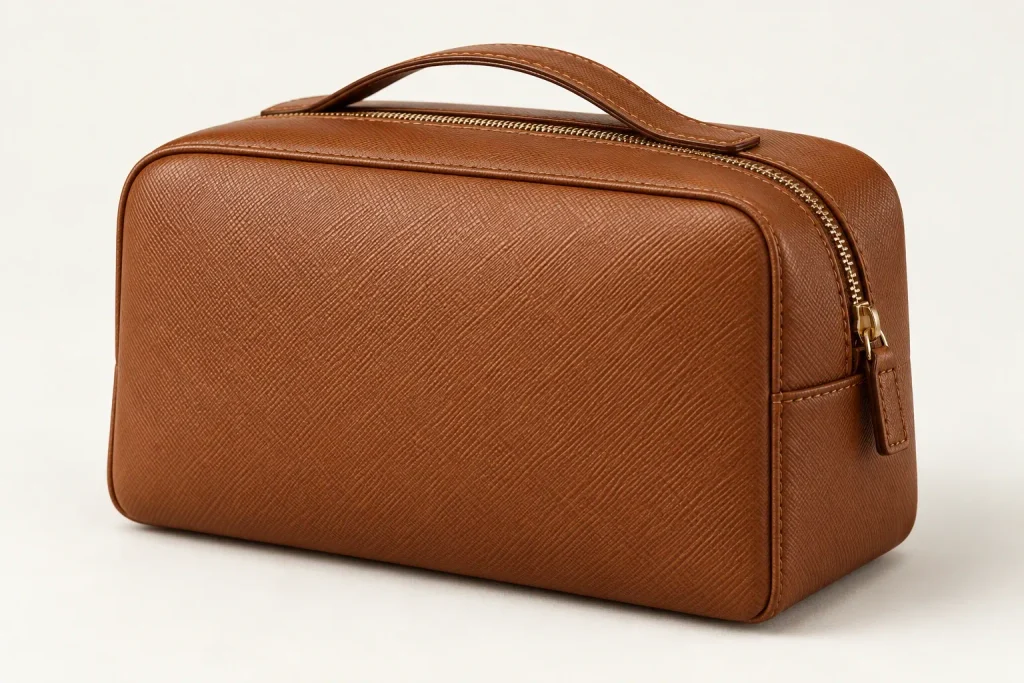
The two textures differ most in one fact: pebbled grain is pressed into hide, Saffiano into a coating.
| Propriedade | Couro seixado | Saffiano Leather |
|---|---|---|
| Textura | Arredondado, irregular bumps | Fine crosshatch lines |
| Hand Feel | Macio, slightly yielding | Firm, smooth with texture |
| Scratch Resistance | Bom: texture hides minor marks | Excelente: wax coating prevents surface scratches |
| Resistência à água | Moderado: needs spray protectant | Alto: wax/PU coating repels water |
| Resistência a manchas | Moderado | Alto |
| Peso | Slightly heavier (thicker hide) | Lighter (calfskin base + thin coating) |
| Formality | Casual to smart-casual | Business to formal |
| Patina Development | Sim: develops character over time | Não: coating prevents patina |
| Typical Base Leather | Cowhide (full-grain or top-grain) | Pele de bezerro (chrome-tanned) |
| Price per sq ft (atacado) | Mais baixo | Mais alto |
| Common Bag Types | Bolsas, tiracolo, duffles, Mochilas | Structured handbags, carteiras, cardholders |
Processo de manufatura: How Each Texture Is Made
Pebbled texture compresses the leather itself, while Saffiano presses a pattern into a surface coating.
Pebbled Leather Production
- Hide selection: Full-grain or top-grain cowhide, split to a consistent thickness.
- Tanning: Chrome tanning or combination tanning (chrome + vegetable). Chrome gives a softer hand feel; vegetable adds body.
- Dyeing: Drum dyed to achieve even color penetration. Aniline or semi-aniline dyes are common.
- Gravação: The leather passes through heated rollers (or is pressed flat) with a pebble-grain engraved plate. The pattern permanently compresses the grain surface.
- Acabamento: Light topcoat (acrylic or polyurethane) to lock in the pattern and add mild water resistance. Some producers skip the topcoat for a more natural feel.
Saffiano Leather Production
- Hide selection: Pele de bezerro, thin and even. Calfskin is chosen for its fine, even grain and smooth surface.
- Tanning: Chrome tanning for softness and consistent color.
- Coating application: A wax-based or polyurethane coating is applied to the surface by roller or spray.
- Hot pressing: A metal plate with the crosshatch pattern is pressed into the coated surface under heat. The heat melts the coating into the pattern, creating the permanent crosshatch texture.
- Curing and finishing: The leather is cooled and may receive a second thin protective coat. The surface is inspected for coating uniformity.
The key manufacturing difference is that pebbled leather’s texture comes from compressing the leather itself, while Saffiano’s texture comes from pressing a pattern into a surface coating. This is why pebbled leather feels softer and develops patina (the leather surface is exposed), while Saffiano feels firmer and stays looking new (the coating protects the leather beneath).
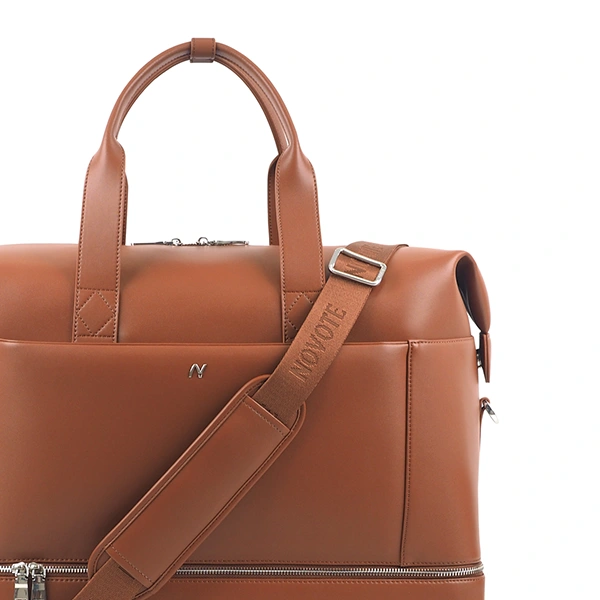
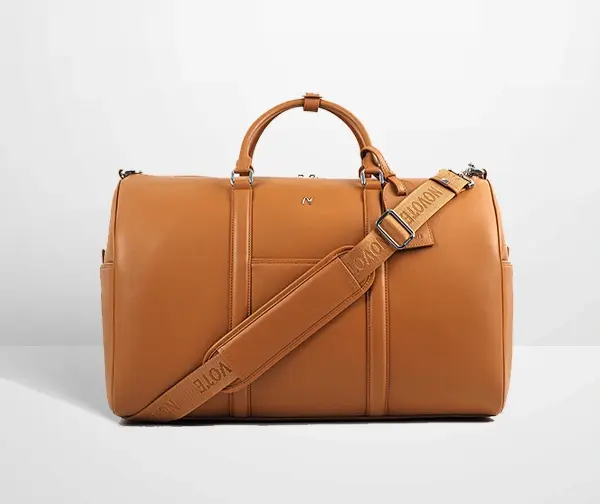
Custom Leather Bags in Pebbled or Saffiano Finish
Which Is Better for Your Bag Line?
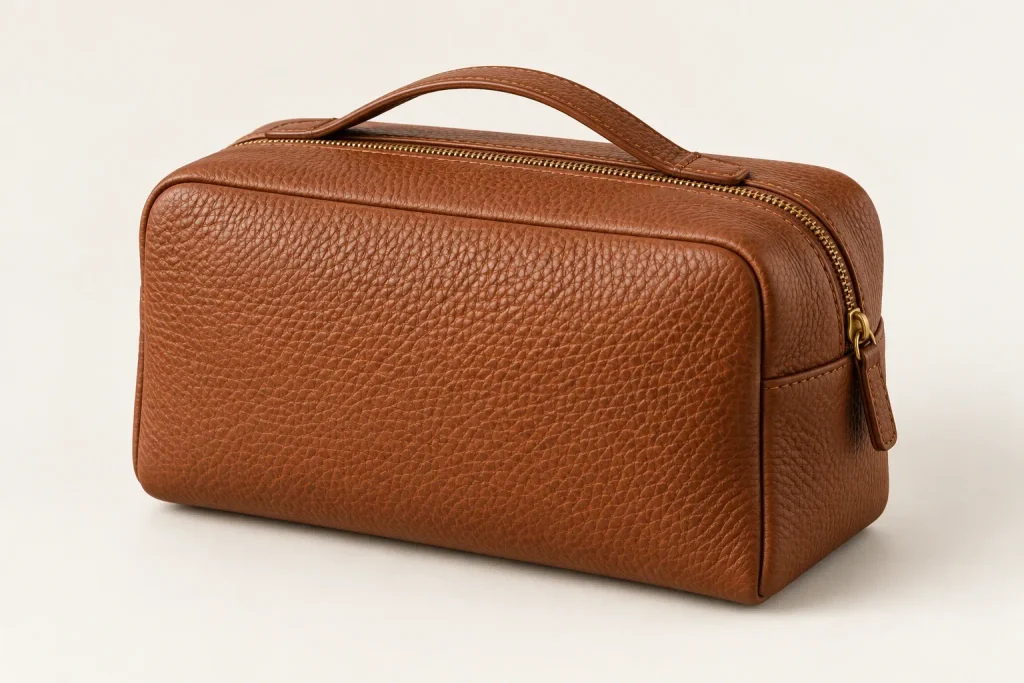
The right texture follows the brand, not the other way around: relaxed lines suit pebble, structured lines suit Saffiano.
The choice depends on your brand positioning and target customer:
Choose pebbled leather if:
- Your brand leans casual, relaxed, or heritage-inspired
- You want leather that develops character over time (a selling point for “buy it for life” brands)
- Your bags are unstructured or semi-structured (totes, hobo bags, soft crossbody styles)
- You want to offer a tactile experience: customers often touch pebbled leather before buying
Choose Saffiano leather if:
- Your brand targets business professionals or the structured handbag market
- Durability and low maintenance are key selling points
- Your bags need to hold a rigid shape (Saffiano’s coating adds stiffness)
- You want consistent color and texture across large production runs
For a broader overview of leather options beyond these two, nosso guia sobre tipos de couro para bolsas covers every major category used in bag manufacturing. If your brand is exploring vegan alternatives, microfiber leather can replicate both pebbled and Saffiano textures at a fraction of the cost: nosso PU vs. microfiber leather comparison breaks down the tradeoffs.
Care and Maintenance Differences
Pebbled leather wants conditioner and brushing; Saffiano wants a damp cloth and no alcohol.
These care requirements matter when you write product descriptions and care cards for your customers:
- Pebbled leather: Limpe com um pano úmido. Apply leather conditioner every 3-6 months to prevent drying. Use a water-repellent spray before first use. The textured surface traps dust in the grooves: a soft brush helps clean between the pebbles.
- Couro Saffiano: Wipe clean with a damp cloth. The wax coating means conditioner is unnecessary and may actually soften the texture. Avoid alcohol-based cleaners, which can dissolve the coating. Store away from direct heat, which can cause the wax to soften and the crosshatch to blur.
Perguntas frequentes
Is pebbled leather real leather?
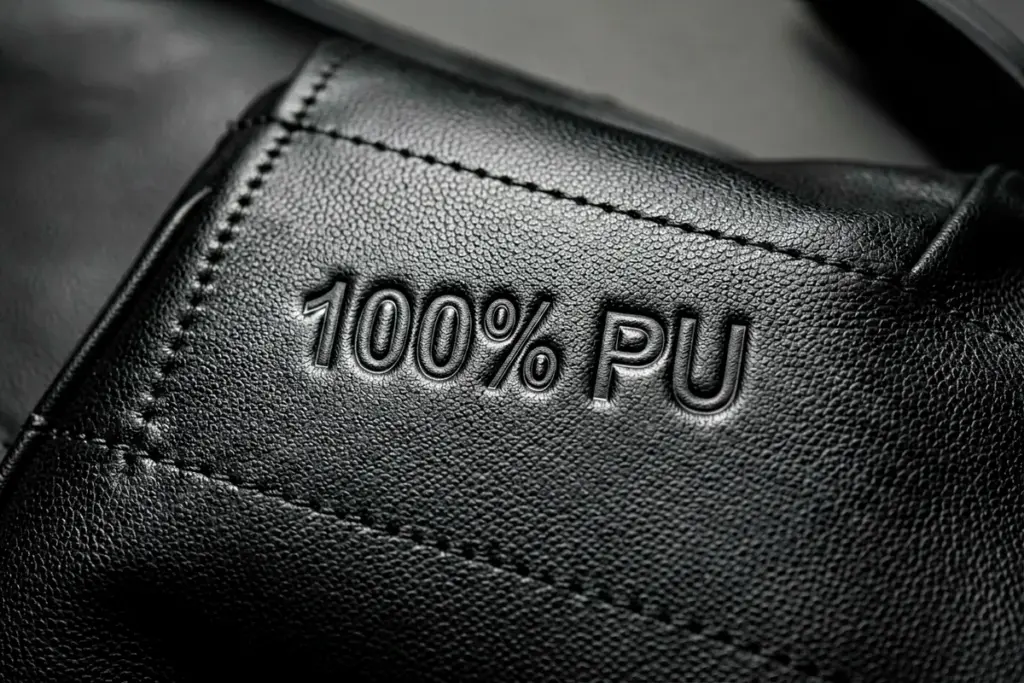
Sim. Pebbled leather is genuine leather (grão integral, grão superior, or split) that has been embossed with a pebble pattern. The embossing changes the surface texture but does not change the fact that the base material is animal hide. No entanto, some budget products labeled “pebbled leather” are actually synthetic PU with a pebble-pattern surface: always verify the material composition from your supplier.
Is Saffiano leather more expensive than pebbled leather?
Geralmente, sim. Saffiano requires more processing steps (coating application + hot pressing + curing) and typically uses calfskin, which is more expensive per square foot than the cowhide used for pebbled leather. At wholesale, Saffiano typically costs more per square foot than comparable pebbled leather. For a deeper look at cost drivers in custom bag production, see our breakdown of custom leather bag costs.
Can I get vegan Saffiano or pebbled leather?
Sim. Both textures can be replicated on microfiber leather or high-grade PU. Microfiber leather in particular can achieve convincing pebbled and Saffiano textures because its fiber structure can be embossed similarly to real leather. Our article on genuine leather vs. vegan leather compares the two material categories in depth.
Which leather is more durable for daily use?
For long-term structural durability, including resistance to tearing, stretching, and edge wear, high-quality pebbled leather is stronger. Its full-grain base keeps the fibers intact, so the bag does not depend on a surface coating that can eventually crack.
Conclusão
Pebbled and Saffiano leather offer distinct looks for different bag collections. NOVOTE helps brands explore material and texture options for custom bags. Contact our team to discuss your design, request material samples, and choose a finish suited to your customers’ needs.