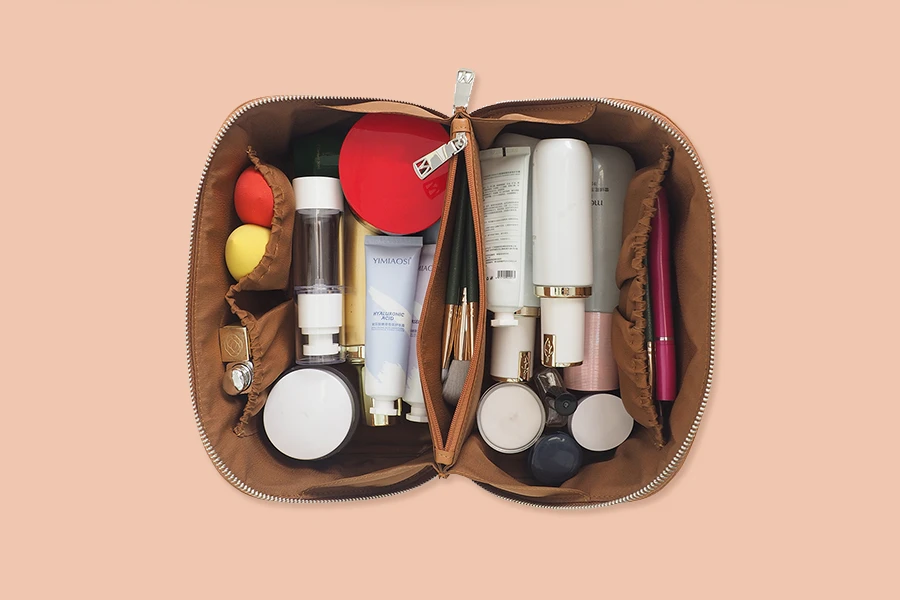


Finding the best leather cosmetic bag for your collection is the critical barrier protecting your brand’s reputation from the high cost of customer returns. One bad production run—defined by splitting seams, peeling linings, or sticky zippers—can quickly erode customer trust and turn a profitable product line into a warehouse liability.
This guide establishes a clear sourcing procedure for your team. We break down the technical evaluation process, covering how to select the right leather and lining, inspect stitch quality and hardware, and spot subtle manufacturing defects that signal poor quality control before you approve a shipment.
Step 1: Set Quality Standards for Your Brand
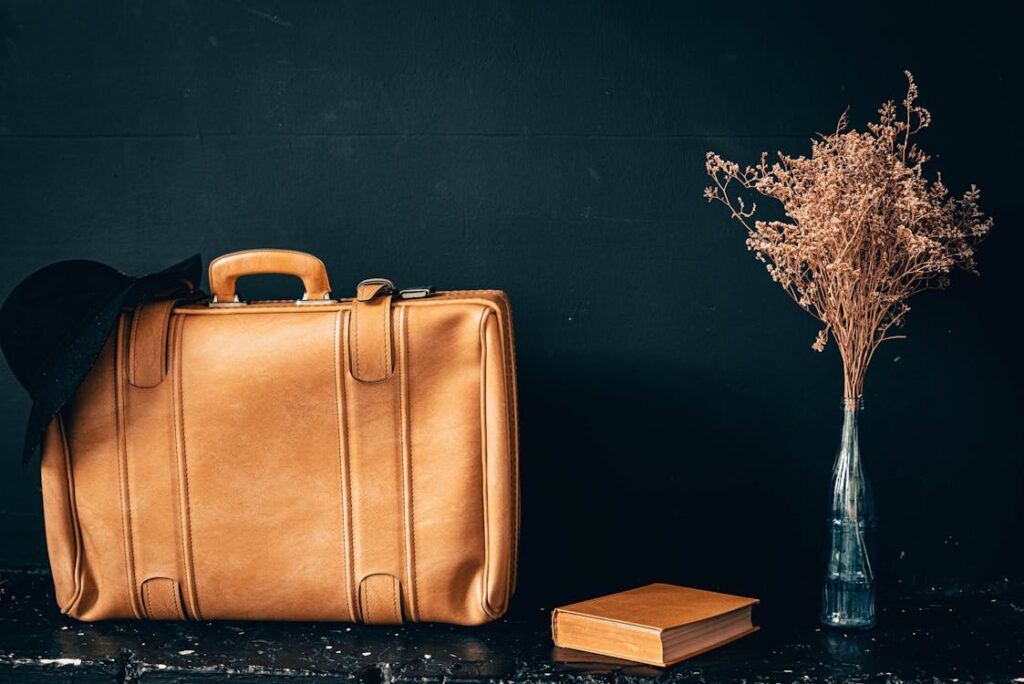
A brand’s profitability and reputation depend on clearly defined and enforced quality standards for materials, craftsmanship, and chemical compliance.
Establish Material Specifications
The foundation of any leather cosmetic bag is its materials. Setting clear specifications for leather, hardware, and lining ensures every component meets your brand’s durability and aesthetic benchmarks. Ambiguity at this stage leads to inconsistent quality and costly rework.
- Choose premium materials such as full-grain or top-grain leather to guarantee longevity.
- Define standards for all hardware, specifying the metal type (e.g., solid brass) and the required finish durability to prevent tarnishing or breakage.
- Specify the lining fabric based on functional needs, such as tear resistance for durability and water repellency to handle potential spills.
Define Production and Craftsmanship Benchmarks
Consistent production quality requires documented procedures for craftsmanship. These benchmarks remove guesswork and guide your manufacturing partner to create a uniform, high-quality product in every batch. They are non-negotiable standards, not flexible guidelines.
- Set a required stitch density, typically 10–12 stitches per inch for leather goods, to ensure strong, durable seams.
- Establish clear color matching tolerances using physical swatches or Pantone references to maintain a consistent brand look across production runs.
- Document precise hardware attachment methods, including reinforcement techniques, to prevent components from loosening or failing under stress.
Implement Multi-Stage Inspection Protocols
A multi-stage inspection process is the only way to catch issues early, reduce waste, and protect your brand’s reputation. Inspections should not be left until the end; they must be integrated throughout the production workflow to identify defects before they become systemic problems.
- Raw Material Inspection: Inspect all leather, hardware, and linings upon arrival to verify they meet your specifications before production begins.
- In-Line Checks: Conduct checks during assembly to monitor stitching integrity, surface consistency, and component alignment in real-time.
- Final Verification: Perform a final audit on a statistically significant sample of finished bags to confirm they meet all documented standards before shipment.
Ensure Safety and Chemical Compliance
Meeting international chemical safety standards is a mandatory requirement for market access and consumer trust. Your quality framework must include rigorous compliance verification for regulations like REACH and CPSIA, as failure can result in fines, recalls, and severe brand damage.
- Require your manufacturing partner to provide current, verifiable documentation for chemical safety compliance.
- Incorporate random checks for restricted substances into your quality control process as an extra layer of verification.
- Stay informed about changing regulations in your target markets to ensure your products remain compliant over time.
Step 2: Choose the Right Leather and Lining
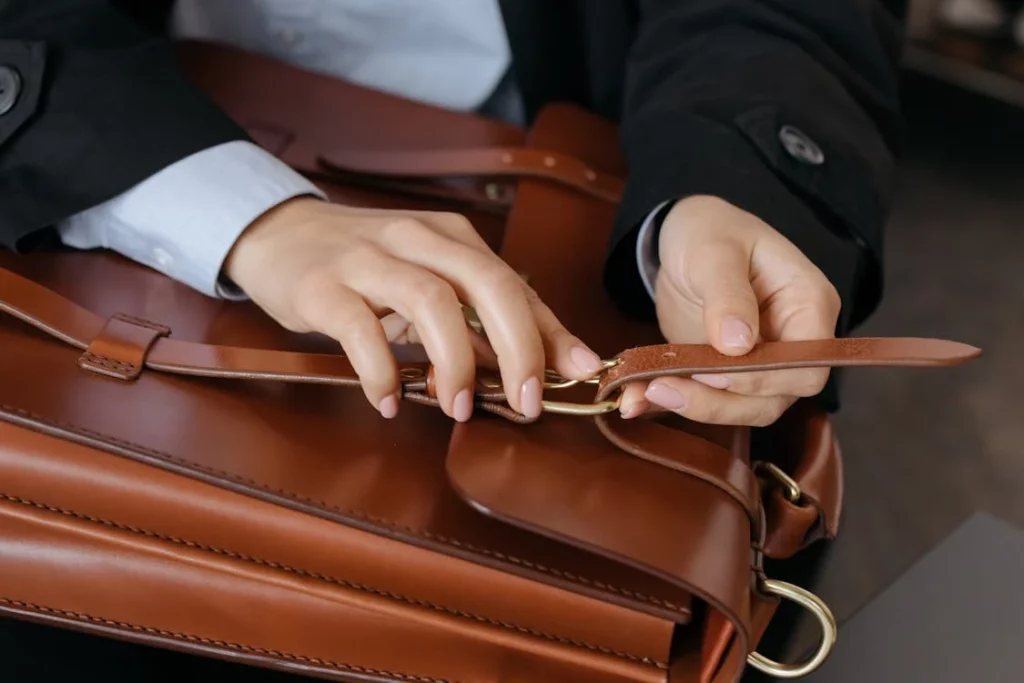
The combination of full-grain, vegetable-tanned leather and a waterproof, wipe-clean lining has become the non-negotiable standard for producing a high-value cosmetic bag in 2026.
Selecting the Right Leather Type
The market today prioritizes authentic, durable materials over generic labels. Full-grain vegetable-tanned leather is the top choice because it’s built for longevity and develops a unique character as it ages, aligning perfectly with consumer demand for quality goods that last. When sourcing, verify the origin of the leather; materials from Italy or South America are consistently associated with higher quality. You must avoid bonded leather, which is made from scraps and lacks the strength and integrity of whole-hide materials. This choice directly impacts the final product’s feel, durability, and perceived value.
| Material Specification | Key Characteristics | Industry Application |
|---|---|---|
| Full-Grain Leather | Highest durability; develops a rich patina over time; retains natural grain and markings. | Premium and luxury cosmetic bags designed for longevity and aesthetic appeal. |
| Top-Grain Leather | Very durable with a more uniform, finished surface; more stain-resistant than full-grain. | Mid-market to high-end products where a consistent look is prioritized over natural aging. |
| Bonded Leather | Made from leather scraps and fibers; low durability; prone to peeling and cracking. | Low-cost, mass-market items. Not suitable for quality cosmetic bag production. |
Evaluating Lining Material for Functionality
A cosmetic bag’s interior is just as important as its exterior. The lining must protect the contents and the leather from potential damage. It needs to be resilient enough to handle spills and the high humidity common in bathrooms or during travel. Always choose a waterproof or highly water-resistant lining, like nylon, to prevent liquids from seeping through and staining the leather. The material should also be a wipe-clean surface for simple maintenance and hygiene. A flimsy lining will tear or degrade quickly, undermining the entire product, so ensure it is sturdy enough for regular use.
Balancing Aesthetics with Durability
A successful product combines visual appeal with practical performance. The ideal leather and lining work together to create a cosmetic bag that feels luxurious but provides reliable protection against everyday wear and tear. The leather choice should project a premium look that also delivers functional longevity. Pairing a quality exterior with a protective interior meets the modern consumer’s demand for functional luxury. The focus must be on materials that maintain their integrity and appearance over time, which delivers better value to the end user and strengthens your brand’s reputation.
Premium Custom Cosmetic Bags for Your Brand
Step 3: Check Craftsmanship Details (Stitching, Zippers, Hardware)

The difference between a premium cosmetic bag and a liability lies in the details. Stitch density, hardware integrity, and edge finishing are not aesthetic choices—they are direct indicators of a product’s structural soundness and long-term durability.
Stitching and Seam Integrity
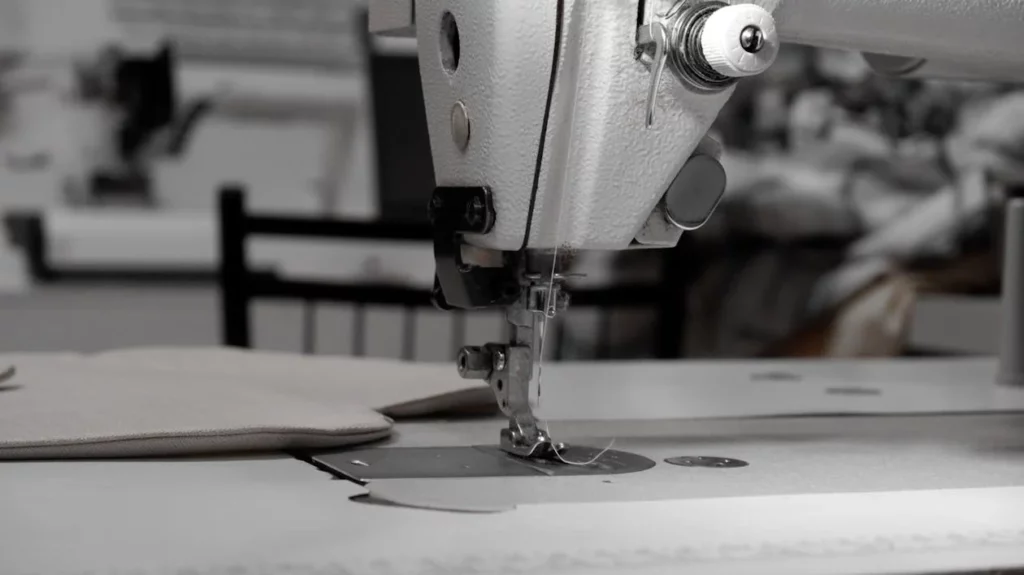
The longevity of a leather cosmetic bag is directly tied to its stitching. Weak or inconsistent seams are the first point of failure under stress. We look for a high stitch density, typically between 10–12 stitches per inch, as this creates a stronger, more durable seam. You should also verify that key stress points, like where handles or straps are attached, use reinforcement techniques such as bar-tacking. The thread itself must be consistent, with straight seams and no loose or frayed ends, ensuring the product can withstand daily use without unraveling.
| Craftsmanship Metric | Standard Quality (Acceptable) | Premium Quality (Recommended) |
|---|---|---|
| Stitch Density | ~8 stitches per inch | 10–12 stitches per inch |
| Hardware Load Test | Supports intended capacity | Tested to bear 2–3x intended capacity |
| Zipper Pull Force | Smooth operation, no snagging | Withstands >10 lbs of force |
Zippers and Hardware Durability
Hardware components are high-contact points that must endure constant use. Zippers, clasps, and rings are tested to withstand force and resist cosmetic wear. Test every zipper to ensure it glides smoothly without snagging or separating from the teeth. The metal hardware should feel solid, not hollow, with a durable finish that resists chipping and tarnishing. Attachments for handles and straps must be robust enough to support the bag’s intended weight; industry best practice is to test these components to bear two to three times the expected capacity.
Edge Finishing and Visual Consistency
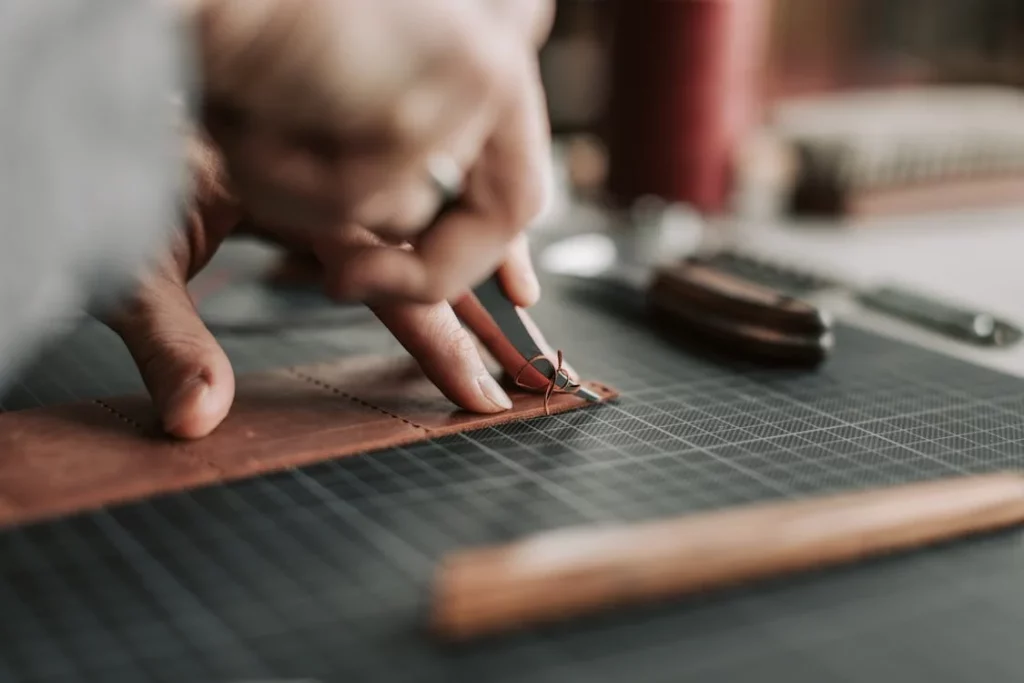
Meticulous finishing separates a high-end product from a mass-produced one. Inspect the raw leather edges to confirm they are cleanly cut and sealed with paint, wax, or a burnishing process. This treatment prevents fraying and moisture absorption, extending the bag’s life. Finally, compare the product against a master reference sample to confirm consistent color, texture, and construction across your entire order. A well-made bag will hold a defined shape, free from wrinkles or puckering, which guarantees the aesthetic uniformity your brand requires.
Step 4: Spot Defects and Balance Price vs. Quality
Effective quality control isn’t an expense; it’s a cost-reduction strategy that balances production realities with customer expectations through systematic, multi-stage inspections.
Implement a Multi-Stage Quality Control System
A systematic quality control process that includes checks at multiple stages is key to preventing defects. This approach identifies issues early, from raw material inspection to final batch sampling, reducing costly rework and protecting your brand’s reputation. Catching a flawed hide before it’s cut is far more efficient than discovering a finished bag with a surface scratch.
- Inspect raw materials before production begins, where rejection rates for flawed leather can be 5-10%.
- Use in-line monitoring during stitching and assembly to catch and correct errors in real time.
- Perform final batch sampling before shipment to confirm the entire order meets your quality standards.
Establish Standardized Inspection Protocols
Define clear, measurable standards for what constitutes a quality product. Using specific tests and tools ensures that every cosmetic bag is evaluated against the same criteria, leading to consistent results across your entire inventory. Ambiguity is the enemy of quality; your inspection team and your supplier must work from the same playbook.
| Inspection Protocol | Industry Standard | Purpose |
|---|---|---|
| Stitch Density | 10–12 stitches per inch | Ensures seam integrity and durability at stress points. |
| Surface Defect Analysis | Use of light boxes and magnification | Identifies scratches, discoloration, or grain inconsistencies. |
| Hardware Stress Test | Zipper pull tests exceeding 10 lbs force | Verifies that zippers and clasps can withstand regular use. |
Align Production Costs with Quality Expectations
Effective defect prevention is not just an expense; it is a cost-efficiency strategy. By aligning your quality standards with your price point and ensuring regulatory compliance, you deliver a product that satisfies customers and supports a healthy profit margin. The goal is to build a reputation for reliability that justifies your market position.
- Treat defect prevention as an investment that minimizes returns and costly after-sales issues.
- Confirm that your manufacturing partner adheres to relevant international standards like ISO 9001, REACH, or CPSIA.
- Define an acceptable quality level (AQL) that matches your brand’s market position and what your customers expect.
Partner with NOVOTE for Your Next Leather Cosmetic Bag Collection
Partnering with a vertically integrated manufacturer in 2026 gives brands direct access to certified sustainable materials, scalable production from low MOQs to high volume, and expert design services under one roof.
Access Sustainable and Certified Manufacturing
In 2026, meeting the market’s demand for eco-conscious products is a baseline requirement, not a bonus. We provide manufacturing that is both sustainable and certified, focusing on ethical sourcing and traceable supply chains. This approach ensures our materials and processes align with current global environmental standards, giving your brand a competitive edge.
- Utilize materials like microfiber vegan leather and recycled PU to build an eco-friendly collection.
- Work with a supplier that holds Global Recycled Standard (GRS) certification, ensuring production integrity.
- Appeal to environmentally aware consumers by highlighting your commitment to sustainable practices.
Leverage Expert Design and OEM/ODM Services
Our in-house R&D team offers comprehensive OEM and ODM support to turn a brand vision into a market-ready product. We manage the entire process from initial concept sketches to pre-production samples, collaborating directly with your team to create cosmetic bags that are unique, functional, and aligned with your brand identity.
- Collaborate with our design specialists to develop custom styles, hardware, and features.
- Choose our ODM service to adapt existing original designs for a faster time-to-market.
- Use our OEM capabilities to produce bags based on your exact specifications and branding.
Benefit from Scalable Production and Low MOQs
We built our manufacturing solutions for businesses of all sizes. Whether you are a startup launching its first collection or an established brand requiring large volumes, our facility handles your needs with competitive pricing and reliable timelines. This flexibility allows you to test new designs or scale rapidly without changing suppliers.
- Launch your collection with accessible Minimum Order Quantities (MOQs), ideal for smaller retailers and new brands.
- Scale your production up to 100,000 bags per month to meet growing market demand.
- Gain a cost advantage through our efficient, large-scale manufacturing operations.
Ensure Quality with Artisan Craftsmanship
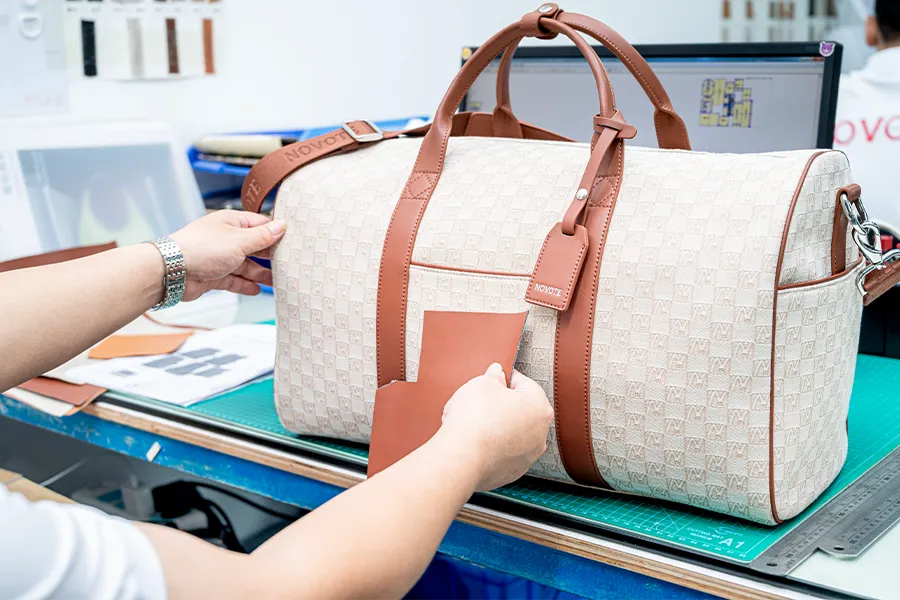
We produce durable, high-quality cosmetic bags by blending traditional handcraftsmanship with modern production technology. Every item passes through a multi-stage quality control system, ensuring the final product reflects the premium standards of your brand and performs reliably for the end user.
- Select from high-performance materials like scratch-resistant microfiber and waterproof nylon.
- Rely on the precision of experienced artisans for details like stitching and hardware installation.
- Reduce customer returns and build brand loyalty with consistently well-made products.
Conclusion
Evaluating leather cosmetic bags goes beyond the price tag. Focusing on material quality, craftsmanship details like stitching, and reliable hardware ensures your collection meets high standards. This commitment to quality builds customer loyalty and protects your brand’s reputation.
If you are ready to source a collection that reflects these standards, our team can help. Contact us to discuss your specific design needs or to request a product catalog.
Frequently Asked Questions
What is the best leather for cosmetic bags?
For cosmetic bags, the best options are full-grain or top-grain leather. Full-grain is the most durable and develops a unique patina over time. Top-grain leather is slightly more processed, making it more resistant to stains and easier to clean, which is a highly practical feature for a cosmetic bag. Saffiano leather, with its cross-hatch texture, is also an excellent choice due to its exceptional scratch and water resistance.
How do I tell if a bag is good quality?
To assess quality, inspect four key areas. First, check the stitching integrity; it should be dense, straight, and even, with no loose threads. Second, examine the hardware; zippers and clasps should feel solid, heavy, and operate smoothly. Third, look at the edges; they should be finished by being painted, folded, or burnished, not left raw. Finally, assess the surface consistency for even color and texture.
What is the most durable lining?
The most durable and practical lining for a cosmetic bag is a high-denier nylon or a performance microfiber. These synthetic fabrics offer excellent tear resistance and are non-absorbent, making them incredibly easy to wipe clean from makeup spills or leaks. While materials like cotton canvas are durable, they can stain easily unless specifically treated for water repellency.
Should I choose metal or nylon zippers?
For a cosmetic bag, a high-quality nylon coil zipper is often the superior technical choice. It is smooth, flexible, and self-healing if the teeth misalign, ensuring long-term reliability with frequent use. Metal zippers offer a premium aesthetic and are very durable if sourced from a top-tier manufacturer, but they can be less smooth and potentially snag items. For pure function and reliability, choose nylon.
How to check for leather defects?
To check for defects, perform a visual and tactile inspection. Look for deep scratches, unnatural discoloration, or blotchy dye application. Run your hand across the surface to feel for bumps, hard spots, or areas that feel unusually thin. Keep in mind that for full-grain leather, minor natural markings like healed scars are a sign of authenticity, not defects. A defect would be a large, unsightly blemish placed on a primary panel of the bag.
Is expensive leather always better?
Not necessarily. While price often correlates with higher-quality materials and craftsmanship, it is not a guarantee of better leather. A high price can also reflect brand markup, marketing costs, or complex design rather than material superiority. The best approach is to evaluate the tangible quality markers—leather type (e.g., full-grain), stitch quality, hardware, and overall construction—instead of relying on price alone.