

Coach is one of the few accessible luxury brands that still leads with leather as its core material. While competitors at similar price points have shifted heavily toward coated canvas and synthetic blends, Coach continues to source and develop a wide range of leather types: each with distinct characteristics in feel, durability, and aging behavior. This guide breaks down every major leather and material Coach uses, what makes each one different, and what sourcing professionals and brand owners can learn from Coach’s material strategy.
Coach’s Leather Portfolio: The Full Lineup

Coach spreads night leather grades across one brand, proving material tiering can serve many price points.
Glovetanned Leather
This is Coach’s signature material and the one most closely associated with the brand’s heritage. Glovetanned leather is chrome-tanned using a process originally developed for making leather gloves: the result is exceptionally soft, supple leather with a natural drape. Coach sources this leather from LWG-rated tanneries, which meet strict environmental and quality standards.
Glovetanned leather is designed to age gracefully. Coach markets this as “wear it out to wear it in”: the leather softens further with use, develops a subtle patina, and becomes more personal over time. It is used across the Coach Originals line (the heritage-inspired collection that includes the Swinger, Tabby, and Rogue bags) and represents the highest-quality leather in the standard Coach range.
Glovetanned Pebble
The same glovetanned base leather, but with an embossed pebble grain added to the surface. This gives the leather the soft hand feel of glovetanned leather with the added visual texture and scratch-hiding properties of a pebbled finish. Coach describes it as having “a silky hand-feel”: the embossing process compresses the surface slightly but the underlying glove-tanned structure keeps it supple.
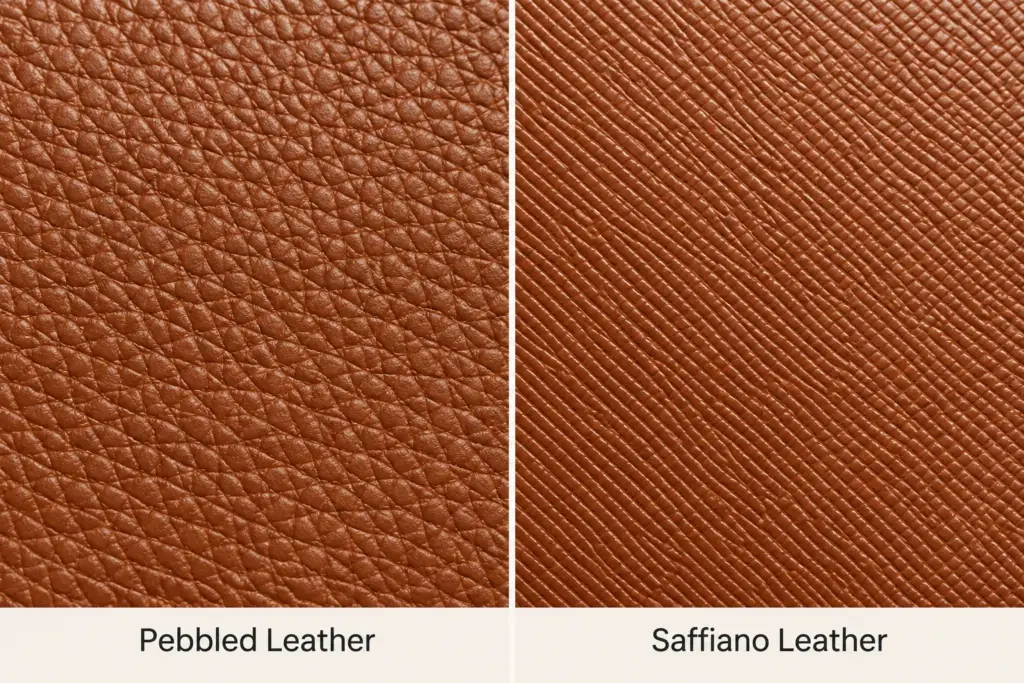
For a deeper comparison of pebbled finishes and how they compare to other textures, see our analysis of pebbled leather vs. Saffiano leather.
Pebble Leather
Distinct from Glovetanned Pebble, Coach’s standard “Pebble Leather” is a lighter-weight leather with a pebbled grain embossing. It is described by the brand as “soft and easy going” and is used in more casual, everyday styles. The base leather may be a different grade or thickness than the Glovetanned Pebble variant, positioned at a lower price point within the Coach range.
Signature Pebble
Coach’s Signature Pebble leather features the brand’s iconic C-pattern embossed into a pebbled leather surface. This combines the texture of pebble grain with the brand recognition of the Signature print. It is used in bags that target customers who want visible branding: the embossed pattern is recognizable from a distance.
Crossgrain Leather
Coach describes crossgrain as “lightweight and durable with a finely grained surface.” The grain pattern runs diagonally across the leather, creating a subtle texture that is more geometric than pebble grain. Crossgrain leather is typically used in Coach’s more structured styles: work totes, satchels, and bags that need to hold their shape. It is lighter than glovetanned leather, making it practical for larger bags that would be too heavy in thicker leather.
Smooth Calfskin / Sport Calf
A polished, smooth-finish leather used in Coach’s more refined styles. Sport calfskin has a slight sheen and a firm hand feel that softens with use. It is often paired with the brand’s 1941 collection and limited-edition pieces. The smooth surface shows scratches more readily than textured leathers, so it targets customers who appreciate a pristine look and are willing to maintain it.
Natural Grain Leather
This leather retains the hide’s natural grain pattern without embossing, giving each piece a unique surface. Coach uses semi-vegetable tanning for this leather, a process that produces a firmer hand feel initially but allows the leather to develop a rich patina over time. It is positioned as the “authentic” option for customers who value natural materials and artisanal processes.
Lambskin Nappa
Fine-grained Italian lambskin with a natural sheen and buttery hand feel. This is the most delicate leather in Coach’s lineup: the brand specifically advises avoiding exposure to heat and moisture. It is reserved for premium styles and limited collections where luxury feel takes priority over practicality.
Suede
Coach uses suede selectively, typically in seasonal collections and specific styles like the Tabby Quilted Suede. Suede offers a soft, velvety texture but is the most maintenance-intensive material in the lineup: it is vulnerable to water, stains, and color transfer from dark clothing.
Non-Leather Materials in Coach’s Range
Even a leather-first brand keeps jacquard, canvas, and recycled nylon for entry prices and seasonal prints.
Signature Jacquard
A woven fabric featuring the Coach C-pattern. This is not leather but a textile: typically cotton or cotton-blend jacquard. It is used in Coach’s more accessible price tiers and seasonal prints. The jacquard weave gives it durability and allows for complex pattern variations that leather cannot achieve.
Coated Canvas
Used in some Coach styles, particularly those with bold prints or the Signature C pattern at a lower price point than all-leather construction. The coating adds water resistance but reduces the natural feel that leather buyers seek.
Recycled Materials in Coachtopia
Coachtopia uses recycled and repurposed materials across selected products. For example, Coach lists recycled PET for the shell and lining of its Coachtopia Loop Mini Tote. Material claims should be checked by product, and recycled content should not be confused with nylon or animal-free construction.
Source Coach-Grade Leathers for Your Own Bags
What Coach’s Material Strategy Teaches Us
The lesson is simple: choose leather by price tier, and let texture give customers a reason to return.
Coach’s approach to materials offers several lessons for bag brand owners and sourcing professionals:
1. Leather Grade = Brand Positioning
Coach uses different leather types at different price tiers within the same brand. Glovetanned leather sits at the top (Coach Originals), while standard pebble leather and Signature jacquard sit at the accessible end. This tiered approach lets the brand serve both premium and mid-market customers without diluting the top-tier perception.
2. Texture Variety and Repeat Purchases
By offering glovetanned (smooth), pebbled, crossgrain, and smooth calfskin within the same collection, Coach gives customers reasons to own multiple bags from the same brand: each with a different tactile experience. This is a strategy any bag brand can replicate by developing 2-3 leather options per style.
3. Tannery Certification and Buyer Trust
Coach’s emphasis on LWG Gold-Rated tanneries is not just marketing: it signals to increasingly informed consumers that the leather supply chain meets environmental and ethical standards. For brands sourcing from leather bag manufacturers, asking about tannery certifications should be a standard step in supplier qualification.
4. The “Aging” Narrative as a Selling Point
Coach’s “wear it out to wear it in” messaging turns a product characteristic (leather that changes with use) into a selling point. This works because it reframes aging as improvement rather than degradation. Brands using full-grain and vegetable-tanned leathers can adopt similar messaging: our guide on leather care for wholesalers includes customer-facing care language.
How to Source Similar Leathers for Your Own Brand
Name the leather, thickness, and tannery certification up front, and a supplier can quote you accurately.
If you want to replicate Coach’s material quality in your own bag line, here is what to ask your manufacturer:
- For glovetanned-style leather: Request chrome-tanned cowhide from an LWG-certified tannery, a supple weight, drum dyed with aniline or semi-aniline finish. Expect a mid-range wholesale price.
- For pebbled leather: Ask for embossed cowhide with a pebble grain plate, same base leather as above. The embossing adds a small surcharge to the cost.
- For crossgrain-style leather: Request corrected-grain cowhide with a fine diagonal embossing and a semi-aniline finish.
- For Saffiano-style leather: Ask for wax-coated calfskin with a crosshatch hot-press finish. This is a specialty process: not all tanneries offer it. Expect a higher wholesale price.
For a complete overview of leather types available for bag production, see our guide on types of leather for bags. If you are evaluating alternatives to genuine leather, our genuine leather vs. vegan leather comparison covers the full spectrum of options, and our article on microfiber leather explains how this synthetic option has closed the quality gap significantly in recent years.
Frequently Asked Questions
Is Coach leather real leather?
Yes. The vast majority of Coach bags are made from genuine leather: cowhide, calfskin, or lambskin depending on the style. Coach is transparent about its materials and lists the specific leather type for each product on its website. Some Coach items use Signature jacquard (a woven textile) or coated canvas, but leather remains the brand’s primary material.
What is Coach’s Glovetanned leather made of?
Glovetanned leather is cowhide that has been chrome-tanned using a process originally developed for leather gloves. The tanning produces exceptionally soft, supple leather. Coach sources this leather from LWG Gold-Rated tanneries, which meet international environmental standards. The leather is designed to soften further with use and develop a natural patina.
Why are Coach bags more expensive than some competitors?
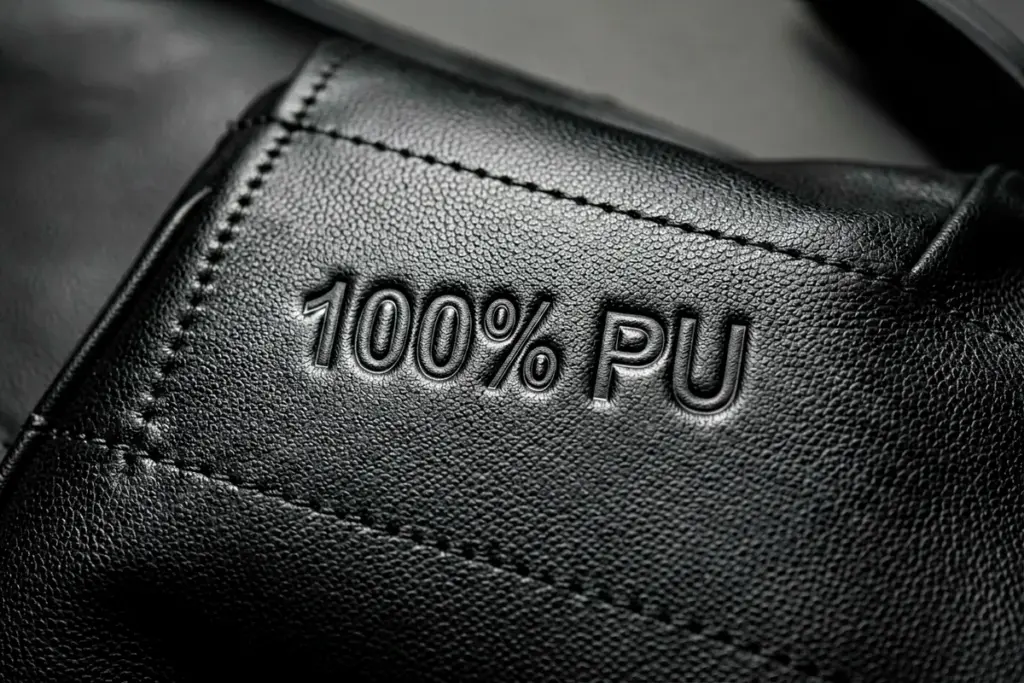
Coach’s price premium over brands like Michael Kors comes primarily from material quality and construction. Coach uses more genuine leather across its range (versus coated canvas and PU), sources from higher-rated tanneries, and maintains denser stitching standards. For a detailed comparison of how these two brands differ in materials and construction, see our Coach vs. Michael Kors breakdown. Our article on custom leather bag pricing explains the cost factors that apply across all brands.
Does Coach use vegan leather?
Coach’s mainline collection does not use vegan leather. However, the Coachtopia sub-brand incorporates recycled and alternative materials. For brands looking to offer vegan leather bags, microfiber leather is currently the closest vegan alternative to Coach-quality genuine leather in terms of hand feel and durability.
Conclusion
Coach’s material choices offer useful ideas for developing a bag collection. Match texture, feel, and cost to your customers’ needs, and describe how each material changes with use. NOVOTE helps brands explore genuine leather and microfiber leather options for custom bags. Contact our team to discuss materials and request samples.