Zum Inhalt springen



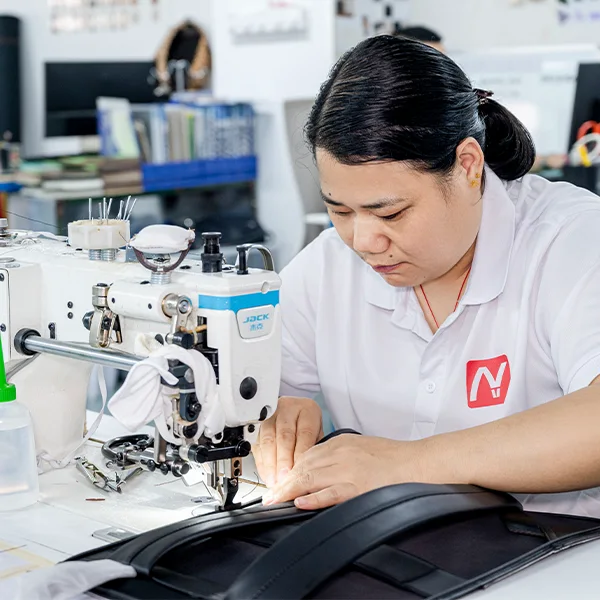
Travel bag manufacturing involves several stages, from material selection and pattern making to sewing and final inspection. Each stage affects the bag’s construction, appearance, and overall quality. Understanding this process helps buyers evaluate samples, compare factory quotations, and set clear production requirements.
At our factory in Huadu, Guangzhou, we have produced travel bags and leather goods since 1995. The following sections explain the materials, production stages, and quality checks involved in making travel bags. To browse the finished results, start from our travel bag collection.
What Materials Are Used in Travel Bag Manufacturing?

Materials decide the price band before the first cut, so choose them with the market in mind.
Travel bags are built from a short list of proven materials, and most collections mix several of them. The four groups below cover the fabrics, leathers, and components we handle every day.
Nylon and Polyester Fabrics
Nylon and polyester are widely used in lightweight travel bags because they offer a balance of weight, Haltbarkeit, und Kosten. Their abrasion resistance and water resistance depend on the fabric construction and any applied coatings. Both materials support various printing and finishing options.
Denier ratings indicate the linear mass density of the yarn, while heavier fabrics are often selected for bag bases and other high-wear areas. These materials are common in travel bags designed for commuters, Studenten, and mass-market collections.
Canvas and Cotton
Canvas brings a heavier hand and a heritage look that photographs well for weekend and outdoor lines. It pairs naturally with leather trims and brass hardware, which is why heritage styled duffles almost always combine the two. Cotton based fabrics accept waxing and washing treatments that change the surface character. The tradeoffs are weight and longer drying after rain.
PU Leather and Genuine Leather
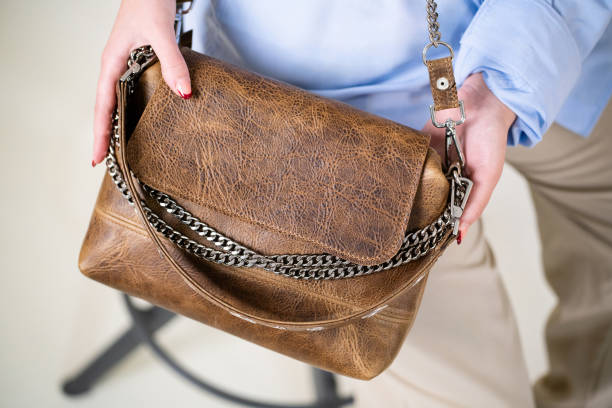
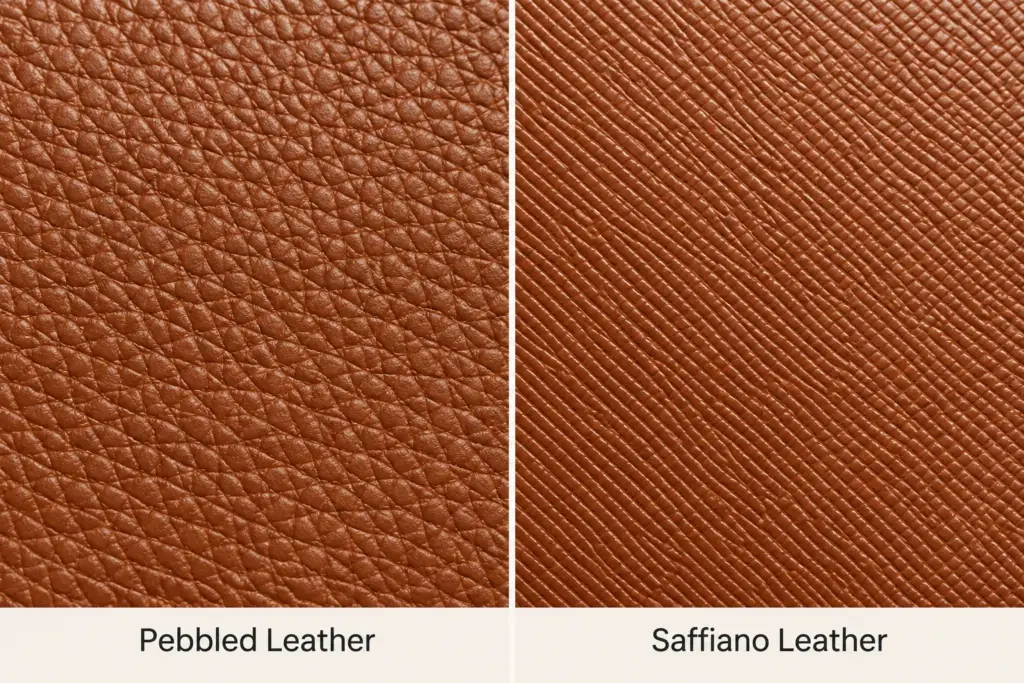
PU leather gives a uniform surface, easy color matching, and a vegan friendly story at an accessible price. Microfiber leather sits a grade above it, with a hand feel close to genuine hide and strong consistency across batches. Genuine leather anchors the premium end, developing patina and carrying brand stories about craft. Our own lines use full grain and top grain cowhide alongside certified microfiber options. For a deeper material comparison, siehe unseren Artikel über Lederarten für Taschen: Vollständige Einführung.
Futter, Reißverschlüsse, and Hardware
Components decide how a bag survives daily use. Linings protect contents and hide internal seams, and water resistant coatings on lining fabric turn a toiletry section into a wet compartment. Zippers take the most mechanical stress of any part, which is why we offer YKK as the reference option and test puller cycles during development. Schnallen, Füße, Nieten, and sliders complete the hardware set, each specified in the tech pack rather than left to chance.
How Are Travel Bags Designed and Prepared for Production?

Good production starts on paper, where mistakes cost nothing to fix.
Preparation turns an idea into documents a factory can execute. Three stages carry most of the weight.
Travel Bag Design and Technical Specifications
Design begins with the brief: target traveler, Kapazität, carrying options, and branding intent. The factory design team converts it into drawings with dimensions, material callouts, and hardware specifications, which together form the technical package. Every later argument about what was agreed traces back to this document, so completeness matters more than beauty.
Pattern Making and Sample Development
Patterns translate the drawing into flat pieces that cut and sew into the intended shape. A skilled pattern maker plans seam allowances, folding lines, and panel junctions so the assembled bag matches the sketch.
The first sample typically takes 7 Zu 10 Arbeitstage. Each revision should include notes on the changes made to dimensions, Materialien, or construction. Once approved, the golden sample serves as the physical reference for bulk production, alongside the confirmed technical specifications.
Material Selection and Cutting Layout
Before cutting starts, the team confirms materials against the spec and plans the layout on each roll or hide. Efficient nesting reduces waste and keeps unit pricing steady across reorder rounds. Batch documents travel with the material, so carton one and carton forty of a bulk order come from the same dye lot.
How Are Travel Bags Manufactured Step by Step?

Each station adds a layer, and the sequence is the quality system.
Travel bag production follows several main stages, from material preparation to final packaging. The exact operations depend on the bag design, Materialien, and required features.
- Design confirmation: Technical specifications and the approved sample are confirmed.
- Material preparation: Fabrics, Leder, Auskleidungen, and hardware are checked against the order requirements.
- Pattern cutting: Fabric and leather panels are cut according to the approved patterns.
- Panel preparation: Leather edges are skived where needed, and reinforcements are positioned.
- Sewing and assembly: Main panels, Fächer, Taschen, Griffe, and straps are assembled.
- Reinforcement and detailing: Selected stress points, Basen, and decorative details are completed.
- Finishing and inspection: Loose threads are trimmed, surfaces are cleaned, and finished bags are inspected.
- Verpackung: Approved products are tagged, geschützt, and packed according to the order specifications.
Fabric Cutting and Panel Preparation
Cutting converts rolls and hides into panel stacks. Operators follow the nesting plan, mark alignment points, and group pieces by order and dye lot so nothing mixes. Clean edges and accurate panels make every later station faster, which is why we treat cutting as the quality foundation rather than a labor step.
Sewing the Main Bag Structure
Sewing starts with the flat assembly of panels into three dimensional form. Load bearing junctions, such as handle roots and strap anchors, receive backing layers and box stitching, because these points carry the full weight of a packed bag. Seamstresses work by station in our plant, so each operator owns a repeatable set of seams and the rhythm stays consistent across a batch.
Installing Compartments, Reißverschlüsse, and Pockets
Interior elements install after the shell takes shape. Zip pockets, dividers, laptop sleeves, and wet sections are sewn in sequence so access openings stay aligned with their panels. Zippers are set into their runs with end stops checked by feel, since a zipper that catches near the tail is the most common customer complaint in soft luggage.
Attaching Handles and Shoulder Straps
Handles and straps anchor through the body panel with backing material rather than onto the surface alone. Adjustable shoulder hardware, such as sliders and hooks, is fitted and cycled by hand at the bench. A finished anchor should feel rigid when you pull it, and any flex at this stage sends the piece back before it reaches inspection. The leather specific version of this flow is covered in our article on In Ledertaschenfabriken: Der Prozess der Ledertaschenherstellung.
Adding Reinforcements and Bottom Panels
Bases and wear zones get their own layers, because airport belts and pavement punish undersides first. Stiffening panels give the bag shape, and feet keep the bottom surface off wet ground on the styles that rest upright. Reinforcement is invisible in product photos, yet it is one of the clearest signals of a factory that builds for years of use.
Your Travel Bag Program, From Pattern to Carton
How Are Travel Bags Finished Before Delivery?
Finishing is where the bag stops being assembly output and becomes your product.
Finishing turns sewn pieces into shippable product. The stages are small, but they are what customers touch first.
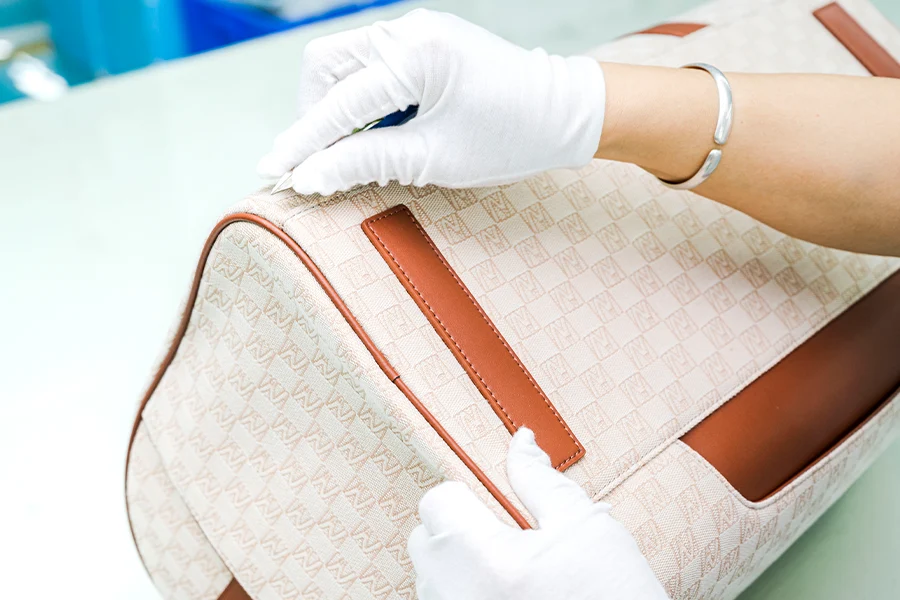
Thread Trimming and Surface Cleaning
Every bag is trimmed of loose threads and cleaned of glue marks, Abnutzungen, and dust from the sewing floor. Leather surfaces get a final wipe that prepares them for packing. Attention here shows up in unboxing, which is the first moment your brand meets the customer.
Shape Adjustment and Final Assembly
Soft bags are pressed and shaped so panels sit square, and removable parts, such as pouches and straps, are matched to their bag. Hanging loops, tag strings, and protective films are fitted at this stage. The goal is that the bag holds its intended silhouette in the carton and on the shelf.
Product Inspection and Packaging
Inspection follows a fixed sequence rather than a glance. The table below shows the checkpoints we run on every travel bag batch.
| Checkpoint | What Is Verified |
|---|---|
| Incoming materials | Stoff, Leder, and hardware against the approved spec |
| Initial check | Straps, Körper, and pocket dimensions and structure |
| Stitching check | Density and uniformity along every seam |
| Detail check | Decorations, Logo-Position, and pattern alignment |
| Functional check | Reißverschlüsse, buttons, Schnallen, and capacity in use |
| Sampling inspection | Random cartons pulled across the finished batch |
| Final check | Reinigung, packing, and carton condition before shipping |
Buyers who want an independent view can book third party inspection, and testing organizations such as Intertek verify product and packaging against program requirements. Packing follows the confirmed specification, whether that is poly bags, dust bags, or printed retail boxes.
What Factors Affect Travel Bag Production?

Three levers set the schedule: what it is made of, what it must do, and how many you need.
Production time and cost move with a few predictable factors. Knowing them helps you plan a season instead of reacting to it.
Material and Construction Choices
Leather builds take longer than nylon builds because skiving, bonding, and edge work add stations. Reinforced structures, bound seams, and coated linings each add handling as well. None of these steps should be skipped to save time, but buyers should expect quotations to reflect them honestly.
Bag Design and Functional Features
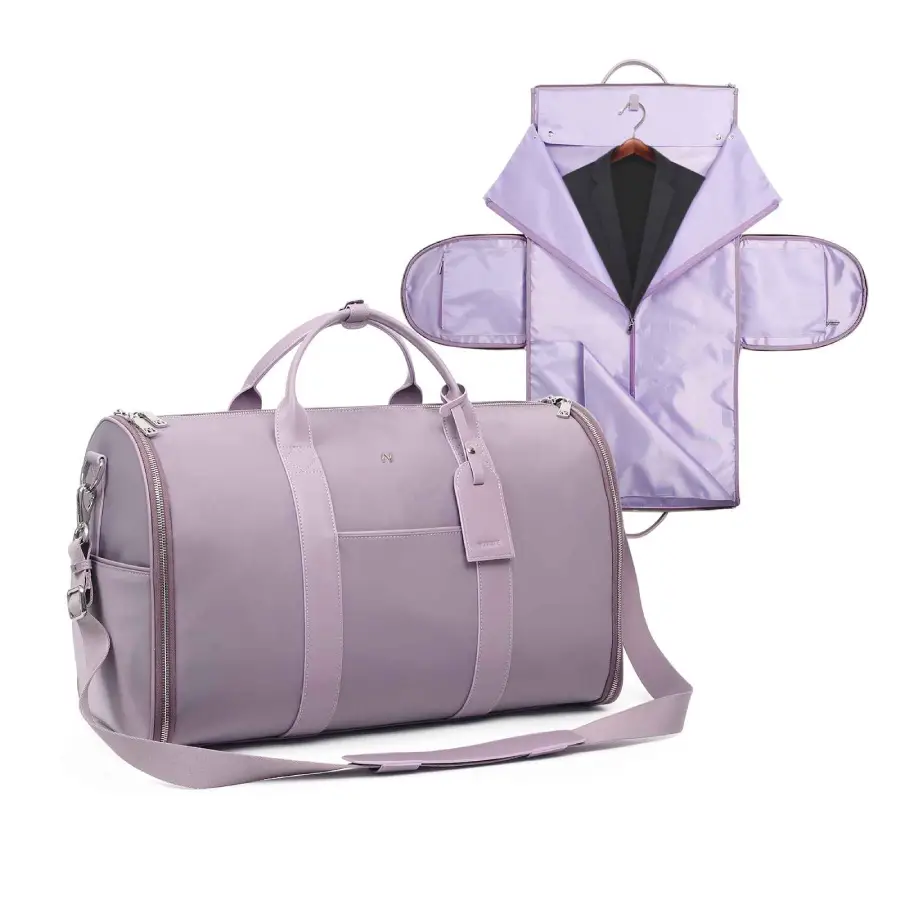
Feature count drives station count. A zip top duffle with one compartment moves fastest, while a convertible bag with sleeves, dividers, and wet sections spends more time per piece across the line. Hot selling styles run on automatic production machines in our plant, which shortens repeatable runs without touching custom details.
Customization Requirements and Order Quantity
Customization adds setup work: Pantone matching, kundenspezifische Hardware, Logo-Werkzeug, and packaging design all need preparation before sewing starts. Order quantity also affects how these setup costs are distributed across units. Bei Novotebag, fully custom travel bags start at 300 Stück pro Stil, with mixed colors available. Logo changes on existing styles start at 100 Stück pro Farbe, and bulk production typically takes 25 Zu 35 working days after confirmation.
For brands interested in the craftsmanship behind handmade leather travel bags, our article on Top-Marken für handgefertigte Leder-Reisetaschen offers examples of brands working with this traditional approach.
FAQs
What materials are commonly used to make travel bags?
Nylon, Polyester, Leinwand, Baumwolle, PU leather, microfiber leather, and genuine leather cover most travel bag construction, with PVC and TPU in clear or weather exposed styles. Futter, Reißverschlüsse, and hardware are components of the same specification and influence durability as much as the body material.
What machines are used in travel bag manufacturing?
Typical equipment includes cutting machines, leather skiving machines, industrial sewing machines, computerized stitching machines for repeatable runs, and presses for rivets and hardware. Hot selling styles also run on automatic production machines, while custom details stay on operator controlled benches.
How long does it take to manufacture travel bags?
Sampling usually takes 7 Zu 10 working days after design confirmation, and bulk production runs 25 Zu 35 working days for confirmed orders. Material availability, feature count, and order size drive the variance, so confirm all three when booking a season.
Can manufacturers produce custom travel bags?
Ja. OEM production follows your drawings and technical package, while ODM adapts factory designs to your brand. Materialien, Farben, Fächer, Hardware, logo methods, and packaging can all be specified. Fully custom designs are typically quoted at 300 Stück pro Stil, and logo changes on existing styles at 100 Stück pro Farbe.
What is the difference between a travel bag sample and a bulk production order?
A sample proves the design: one or a few pieces, made on bench stations, with a fee attached. A bulk order reproduces the approved sample across hundreds of pieces on production lines, under batch QC. Bulk prices depend on confirmed specifications, because vague specs at sample stage turn into substitutions at production stage.
Abschluss
Travel bags are made long before the sewing machine starts, in the material choices, the patterns, and the specifications that the whole line follows. Buyers who understand the sequence can read quotations, judge samples, and spot the factories that cut corners at hidden stations. Send us your design brief and our team will walk you through materials, Probenahme, and a production schedule you can plan a season around.