

There is a specific, sinking feeling that hits when a pen slips. You look down, and there it is—a jagged blue line on a pristine leather surface.
The immediate reaction is usually to grab a wet wipe and scrub for dear life. Don’t.
Aggressive cleaning often turns a fixable accident into a permanent disaster. Panic causes more damage than the ink itself. Instead of rushing, we need to look at the chemical reality. In this leather care guide, we will walk through exactly how to remove pen ink from leather effectively. We will show you how to preserve the finish and the value of the material.
Identify Your Leather Type First
Before reaching for any cleaning solution, you must identify the canvas you are working on. Treating every skin the same way is a mistake. In the leather industry, we know this is the fastest route to ruining a product. You need to determine if the leather has a protective finish or if it is raw.
The Water Drop Test
Find a hidden spot. Check under a strap or on the bottom gusset. Place a tiny drop of water on the surface. Now, wait five seconds.
- Scenario A: The water beads up. This indicates Pigmented or Protected Leather. The surface is sealed with a top coat. This is usually polyurethane. The ink is currently sitting on top of this clear coat rather than in the fibers. This is the best-case scenario for removal.
- Scenario B: The water darkens the leather and soaks in. This is likely Aniline or Unfinished Leather. It is highly porous. If water soaks in, the ink has likely penetrated deep into the dermis. This type requires extreme caution. DIY cleaning fluids can stain it further.
Note: The methods below are primarily designed for Protected Leather as described in Scenario A. This accounts for the vast majority of leather bags and furniture.
Immediate First Aid for Fresh Spills
Ink is essentially a dye suspended in a solvent. You have a “golden window” of less than an hour. After that, the solvent evaporates. The dye then begins to bond chemically with the leather’s finish.
Why You Should Blot Instead of Rubbing
If the ink spill is fresh and wet, the goal is lift. Do not spread it.
Leather grain looks like a landscape of hills and valleys under a microscope. Rubbing a stain laterally is dangerous. You push the liquid ink off the “hills.” This forces it down into the “valleys” of the grain. Furthermore, the friction from rubbing generates heat. Heat can help cure the ink to the surface.
The Correct Protocol:
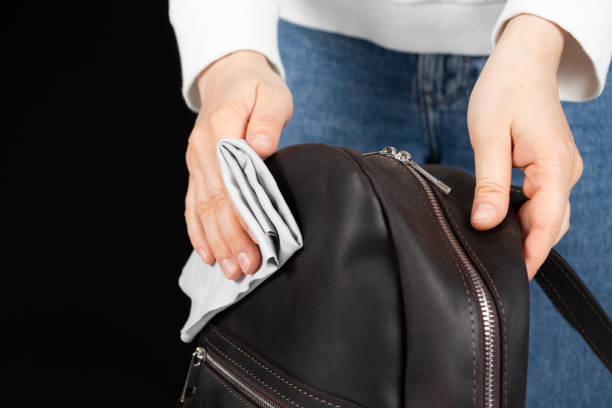
- Take a dry, white paper towel or a lint-free microfiber cloth.
- Press directly down on the ink spot with firm pressure.
- Lift straight up.
- Rotate the cloth to a clean section.
- Repeat until no more color transfers.
It feels counterintuitive to be so passive. However, blotting is the only way to remove the excess without embedding the pigment deeper.
Proven Ways to Remove the Stain

Maybe the surface ink is gone. Or maybe you are dealing with a dried line. In either case, you need a chemical agent. We need to re-liquefy the ink to wipe it away. We must do this without dissolving the leather’s protective coating. Here is how to get ink out of leather using industry-standard techniques.
Using Isopropyl Alcohol on the Exterior
Forget household vinegar or dish soap. They lack the solvent properties needed here. Isopropyl Alcohol (IPA) is effective, but concentration is key.
The Sweet Spot: 70% Isopropyl Alcohol
- Why not 99%? High-purity alcohol is too harsh. It evaporates too fast to work effectively. More dangerously, it can strip the polyurethane top coat. This leaves a dull, matte patch. You cannot fix this without professional refinishing.
- Why not 50%? It contains too much water. This can distort the leather fibers if they get too wet.
The Removal Process:
- Spot Test: Always apply a small amount to a hidden area first. If color transfers to your clothes, stop.
- The Applicator: Use a cotton swab or Q-Tip. Do not use a large rag. You want to limit the alcohol’s contact strictly to the ink line.
- Trace and Lift: Dampen the swab. Do not soak it. Gently trace the ink line. You are not scrubbing; you are dissolving. You will see the pigment bleed onto the cotton.
- Frequent Changes: As soon as the cotton tip turns blue or black, discard it. Use a fresh one. Using a dirty swab will only smear diluted ink back onto the bag.
- The Wipe Down: Once the ink is gone, wipe the area with a slightly damp cloth to neutralize the alcohol.
Cleaning Ink Leaks from the Inside Lining
Interior spills are often worse than exterior ones. A pen uncapping inside a bag can create a massive blot on the lining. Since linings are typically cotton, polyester, or microsuede, they behave differently from the outer shell.
If the lining is loose, known as a drop lining, and not bonded to the leather, pull it out. Separate it from the bag as far as possible. Place a thick, absorbent towel behind the stained fabric. This “buffer” is crucial. It prevents the alcohol and dissolved ink from soaking through the fabric. You don’t want to stain the backside of the leather skin. For fabric linings, you can be more aggressive with fluids. Saturate the spot with alcohol or a specialized fabric stain remover. Then, blot firmly into the towel underneath.
Common Myths That Can Ruin Your Leather
The internet is full of bad advice. In the leather trade, we see the aftermath of these “hacks” all the time. Using the wrong product can turn a small ink mark into an unfixable abrasive burn.
Why Hairspray Is Bad for Leather
This is the most persistent myth in leather care. Decades ago, hairspray was essentially alcohol and propellant. So, it actually worked on ink.
However, modern hairspray is different. It is formulated with lower alcohol content. It is packed with stiffeners, lacquers, and oils designed for hair, not hide. Spraying this on leather leaves a sticky residue. It might lift some ink. However, it seals the rest under a layer of gummy lacquer. This attracts dust and yellows over time. You are trading a blue mark for a sticky, dirty patch.
The Risks of Using Magic Erasers
Melamine foam, often sold as Magic Erasers, is an abrasive. It feels soft, but it acts like 3000-grit sandpaper.
When you use this on leather, you are not chemically removing the ink. You are physically sanding down the surface. You will remove the ink, yes. But you will also sand off the protective clear coat and the top layer of the leather dye. The result is a light spot. It will look different from the rest of the bag and feel rough. Once that protective layer is sanded away, the leather becomes incredibly vulnerable. It will absorb oil and stains much faster.
How to Restore Moisture After Cleaning
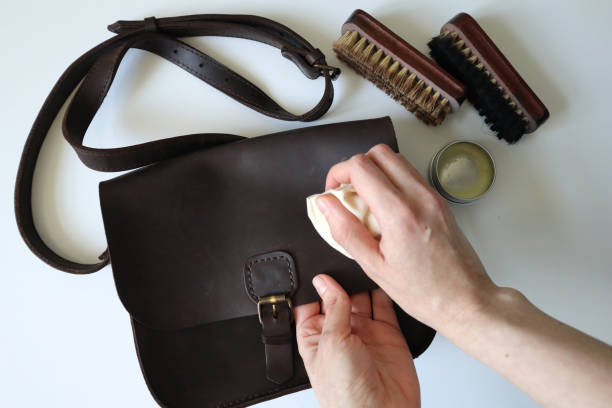
Once the ink is gone, you have one final, critical step. Cleaning is a destructive process by nature. Isopropyl alcohol acts as a solvent. It effectively strips away ink, but it also strips away natural oils. These oils are exactly what keep the leather supple and prevent cracking. If you leave the area “naked” after cleaning, it can dry out and degrade.
You must follow up with a leather conditioner. Look for products containing natural emulsions like lanolin or beeswax.
- Apply a dime-sized amount to a soft cloth. Do not apply directly to the leather.
- Massage it into the leather in circular motions.
- Treat the whole panel: Don’t just condition the spot where the ink was. Treat the entire flap or side of the bag. This ensures that the color depth and sheen remain uniform. It prevents a visible “clean spot.”
Know When to Call a Professional
There is a line between maintenance and restoration. Recognizing when you have crossed it saves money in the long run.
Maybe you are dealing with Nubuck, Suede, or Raw Aniline leather. In that case, put the home remedies away. These materials are like sponges. Liquid cleaners will spread the dye instantly. This creates a large, dark ring. Often, this is far harder to remove than the original pen mark.
Additionally, consider the value of the item. Maybe the bag is a high-end luxury piece. Or perhaps it is a sentimental heirloom. In these cases, the risk of DIY error is too high. Professional leather restoration experts use airbrushes and color-matched pigments. They can cover stains that cannot be lifted. They can obscure the ink without compromising the texture of the leather. This is nearly impossible to achieve at home.
Final Thoughts
Always remember the golden rule: Start gently. Blot before you rub. Test before you apply. With the right technique, a slip of the pen remains just a minor anecdote in the bag’s journey, not the end of it.
At Novote, our philosophy is simple: quality manufacturing reduces maintenance headaches. We know that the longevity of a product depends heavily on the quality of the hide. This is true whether it is a rugged leather weekend bag tossed into a trunk or a sleek leather business bag carried to daily meetings. We want the products we build to represent your brand well, long after they have left the shelf.
If you are looking for a manufacturing partner who cares as much about the details as you do, we are here to help. Explore our manufacturing capabilities or reach out to see how we can bring your designs to life.