

Sourcing the wrong material kills profit margins faster than almost any other decision. If you put expensive Italian leather into a budget tote, you destroy your markup; if you use cheap PU for a “luxury” crossbody, you guarantee customer returns when the strap peels six months later.
This decision requires matching the physical properties of the material to the financial reality of your business model. One builds a brand on heritage and longevity; the other builds a brand on speed, scale, and ethical marketing.
This guide breaks down the real costs, production realities, and durability differences to help you choose the most profitable material for your brand.
What Are the Differences Between Genuine Leather vs. Vegan Leather?
To understand the value, you have to understand the chemistry. The difference defines how you label your product legally and how you market it to consumers.
What are Genuine Leather and Vegan Leather?
Genuine leather is biological. It is a preserved skin, typically from cattle, sheep, or goats. Because it grew on a living animal, it has a fiber structure that is dense, breathable, and incredibly strong. It also carries the animal’s life history: grain variations, growth lines, and distinct textures.
What is vegan leather material? It is an engineered simulation. The goal is to copy the look and feel of skin using synthetic compounds. It involves no animal products.
Is vegan leather real leather? No. In fact, calling it “leather” without a qualifier like “faux” or “synthetic” is illegal in many markets (including the EU and parts of the US) because it misleads the consumer.
What is man-made leather usually made of?
- Synthetic (Petroleum-based): This covers 90% of the market. It is usually a textile backing coated with Polyurethane (PU) or Polyvinyl Chloride (PVC). It creates a uniform, waterproof surface.
- Bio-based (Plant-based): The newer generation is made from pineapple leaves, cactus, or apple peels. Be aware: most of these still use plastic resins to hold the plant fibers together.
The Comparison of Genuine Leather vs. Vegan Leather
Here is the cheat sheet for how these materials impact your logistics and product quality:
| Feature | Genuine Leather | Vegan Leather (PU / PVC) |
|---|---|---|
| Material Cost | High investment with potential for significant retail markup | Low cost ideal for protecting margins in mass-market products |
| Minimum Order (MOQ) | Flexible sourcing; stock colors often available by the single hide | Restrictive; custom colors often require large production runs (500+ yards) |
| Expected Lifespan | 10–30 years; strengthens with use and develops a unique patina | 2–5 years; prone to hydrolysis where the surface eventually cracks |
| Production Efficiency | Lower; requires skilled manual cutting to avoid natural scars and defects | High; uniform rolls allow for automated multi-layer cutting with zero waste |
| Touch & Smell | Warm, organic texture with a distinct, rich leather scent | Uniform, cooler touch with a chemical or neutral plastic scent |
| Water Resistance | Porous nature absorbs moisture and requires protective treatment | Non-porous surface naturally repels water and stains without treatment |
How Production and Scalability Differ on the Factory Floor
Processing genuine leather is a manual, skilled operation, whereas vegan leather allows for industrial automation.
Genuine Leather: The Challenge of Natural Variation
A cowhide is not a perfect rectangle; it is an organic shape with a neck, belly, and legs. The grain on the back is tight and premium, while the grain on the belly is loose and stretchy.
Workers must inspect every square inch. They have to dodge natural defects like healed scratches, insect bites, or branding marks. This slows down cutting significantly.
The “Hidden Tax” of Leather: Wastage.
You pay for the whole hide, but you can’t use the whole hide. To get clean, flawless panels for a handbag, manufacturers often throw away 25% of the material. This waste factor drives your actual cost per foot much higher than the list price.
Vegan Leather: The Efficiency of Automated Rolls
Vegan leather arrives in massive rolls, typically 54 inches wide, with zero defects. The texture is identical from the start of the roll to the end.
- Speed: Factories can stack 50 layers of vegan leather and cut them all at once with a laser or die-cutter.
- Uniformity: You don’t need skilled artisans to spot-check for scars. The quality is predictable.
If your business relies on dropping 10,000 identical units for a flash sale, real leather is a logistical nightmare. Vegan leather is the only way to scale that fast.
The Real Cost Breakdown for Your Profit Margins

Don’t just look at the invoice price; look at the retail potential. While genuine leather costs 3x to 5x more upfront than standard vegan leather—a significant hit for startups with limited cash flow—the markup potential changes the math completely.
The “Luxury” Multiplier
The “Genuine Leather” label allows you to command a significantly higher retail price.
Consumers naturally associate real leather with luxury and longevity, which makes them willing to accept a higher price tag.
- The Vegan Bag: You spend $15 to make it. You retail it for $60. You make $45 gross profit.
- The Leather Bag: You spend $50 to make it. Because of the higher perceived value, you can retail it for $250. You make $200 gross profit.
You sell fewer units, but you make more money per unit. The material does the heavy lifting for your marketing.
The Inventory Trap of Vegan Leather
While genuine leather vs. vegan leather looks like a win for vegan on cost, watch out for the Minimum Order Quantity (MOQ).
Suppliers often require you to buy 500 or 1,000 yards of custom-colored PU. If you are a small brand, you might only need 100 yards. You end up paying for thousands of dollars of extra plastic that sits in your warehouse gathering dust. Leather hides can often be bought one by one.
Which Material Offers Better Durability?
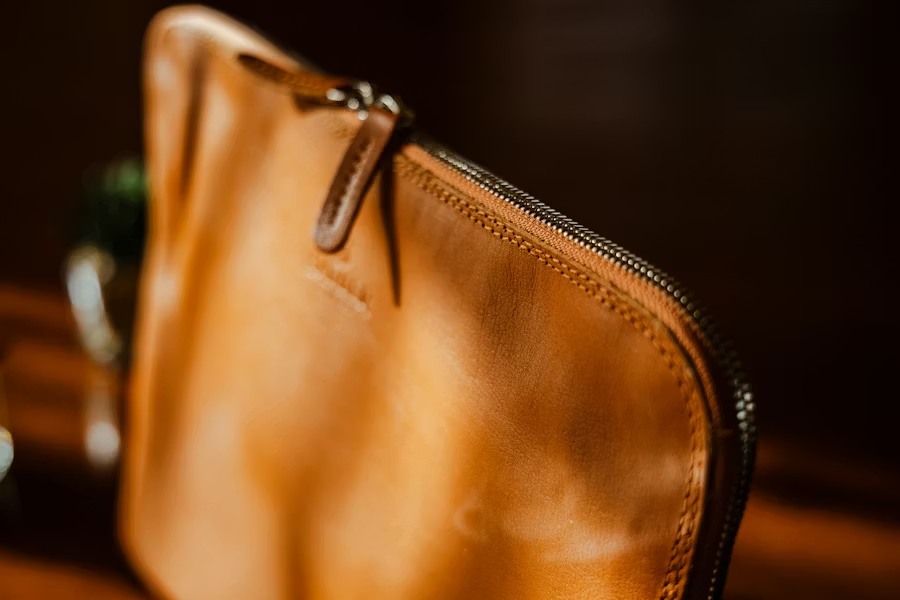
Genuine leather is durable. It has a self-healing quality. Scratches blend in over time. Usage creates patina—that soft, shiny, vintage look that people love. A well-made leather bag looks better after 5 years than it did on day one.
Vegan leather has an expiration date. Since what is man made leather is essentially plastic on fabric, it suffers from hydrolysis. Moisture in the air slowly attacks the chemical bonds. Eventually, the surface becomes brittle.
You have seen this on cheap office chairs or old jackets: the “leather” starts peeling off in tiny flakes. This usually happens within 3 to 5 years.
Why this matters: If a customer pays $300 for a bag and it peels, they will feel cheated and destroy your reviews. If they pay $50 and it peels after a few years of heavy use, they generally accept it. Match the lifespan to the price tag.
Environmental Impact and Sustainability Comparison
This is a messy topic. Both sides claim to be the “green” option, but both have baggage.
The Reality of Genuine Leather:
It is a byproduct. If we stopped making leather bags tomorrow, the meat industry would still produce millions of hides. Using them reduces waste. However, the tanning process (turning skin into leather) uses heavy chemicals like chromium. It requires strict water treatment to be safe.
The Reality of Vegan Leather:
It is marketed as “Eco-friendly,” but it is usually made from fossil fuels (petroleum). It is plastic. It does not rot; it breaks down into microplastics that pollute oceans.
The Strategic Trade-Off:
- If your brand fights against animal cruelty: Go for Vegan.
- If your brand fights against plastic pollution: Go for genuine (specifically Vegetable-Tanned leather).
How to Choose Between Genuine Leather and Vegan Leather for Your Brand
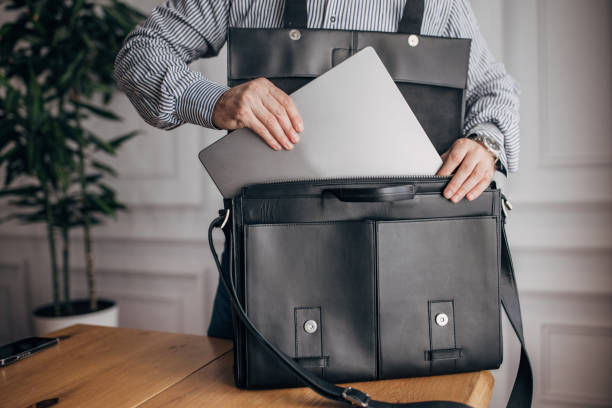
Making the right choice requires looking beyond the price tag. You need to assess your design’s technical feasibility and your brand’s risk tolerance.
1. The Design & Construction Factor
Your design specifications immediately limit your material options.
- Edge Finishing: Do you want “Raw Edge” or “Burnished Edge” aesthetics? This is only possible with genuine leather. Vegan leather layers cannot be burnished; they must be folded (turned edge) or heavily painted with edge paint to hide the internal fabric backing.
- Weight & Skiving: If your bag requires complex layering, we need to “skive” (thin down) the material. Genuine leather maintains structural integrity even when skived to 0.8mm. Vegan leather often loses stability or tears when skived too thin because the backing mesh gets compromised.
2. The “Jungle Test” and Quality Control
How will you validate quality? The testing standards differ completely.
- For Vegan Leather: You must request a Hydrolysis Test (often called the “Jungle Test”). We simulate 5–10 years of humidity in a lab chamber. If you skip this, you risk your entire batch peeling in humid markets like Florida or Singapore within a year.
- For Genuine Leather: The focus is on chemical compliance (REACH, CA Prop 65). You need to ensure the tannery is certified to prevent issues with Chrome VI or heavy metals.
3. The Target Audience & Price Architecture
Finally, align the material with your customer’s wallet and values.
- The “Entry-Level” Strategy: Use Vegan Leather for items retailing under $100. It attracts Gen Z buyers who prioritize color trends and ethical marketing over longevity.
- The “Heritage” Strategy: Use Genuine Leather for items retailing over $250. These buyers pay for the distinct sensory experience: the rich scent, the organic grain, and the patina that develops over decades.
Why Smart Brands Often Use Both Materials in Their Strategy
Successful brands rarely restrict themselves to a single material category. They utilize a Tiered Portfolio approach:
- Tier 1 (The Anchor): A core collection of full-grain leather bags. High price, high status. This establishes your brand authority.
- Tier 2 (The Diffusion): A seasonal collection of premium vegan leather. Accessible price, high fashion. This drives cash flow and acquires new customers.
This approach lets you capture the luxury buyer and the ethical shopper without alienating either.
Final Thoughts
Ultimately, the decision comes down to the specific product you are building. A heavy-duty leather travel bag designed for heavy use often demands the resilience of real hide to age well over time. Meanwhile, a sleek leather business bag might prioritize the uniformity and weight savings of premium microfiber, while a vibrant leather weekend bag could benefit from the color consistency that only synthetics can provide.
As a dedicated leather bag manufacturer, Novote bridges the gap between raw material sourcing and finished product engineering. We have optimized our production lines to craft premium finished goods using both Italian full-grain hides and high-grade vegan alternatives, ensuring that whether you are building a heritage brand or a fast-fashion line, the execution of every bag is flawless.
Ready to start your next collection?
Contact our team today to discuss your designs. Let’s work together to find the perfect material solution that fits both your creative vision and your profit margins.