

Si está en el negocio mayorista de equipaje o planea lanzar su propia marca de viajes, Probablemente hayas mirado una hoja de cálculo a altas horas de la noche., preguntándose qué camino tomar. ¿Deberías diseñar un bolso desde cero?? ¿O deberías elegir un diseño que ya exista??
Como fabricante de equipaje, Escucho esta pregunta casi todos los días.. En la industria de fabricación de equipaje., Los términos OEM y ODM se utilizan constantemente.. Pero entender la definición del diccionario no es suficiente. Debe comprender cómo estos dos modelos afectan su flujo de caja., tu fecha de lanzamiento, y el futuro de tu marca.
Hoy, Voy a guiarte a través de las diferencias reales., los costos ocultos, y los plazos específicos que utilizamos aquí en la fábrica. sin pelusa, solo la verdad de la industria.
Lo que realmente separa a los OEM de los ODM en el equipaje?
Para decirlo simplemente, la diferencia radica en quién posee la propiedad intelectual (IP). y quien paga por el “estampación.”
OEM (Fabricante de equipos originales) es el “construir para imprimir” modelo. En este escenario, tu eres el arquitecto. Tú proporcionas el diseño., los bocetos tecnicos, y las dimensiones específicas. Eres dueño del producto por completo.
- La característica clave: Nosotros, la fabrica, No puedo vender este diseño a nadie más.. es tuyo.
- La realidad: Eres responsable de la investigación y el desarrollo. (R&D) costos. En la industria del equipaje, Esto significa específicamente pagar por los moldes. (estampación) para la cáscara dura, el mango, y a veces hasta las ruedas.
ODM (Fabricante de diseño original) es el “etiqueta privada” modelo. Aquí, la fábrica es el arquitecto. Ya hemos diseñado la maleta., creó los moldes, y probó la estructura. Básicamente, estás navegando por un catálogo de productos terminados y seleccionando uno para ponerle tu logotipo..
- La característica clave: El diseño pertenece a la fábrica.. Podemos venderle el mismo modelo base a usted y a un competidor en un país diferente., Aunque normalmente ofrecemos exclusividad en regiones específicas..
- La realidad: Ahorras enormes cantidades de tiempo porque el R&D ya está hecho.
Piensa en ello como comprar un traje.. OEM es un traje a medida cortado a partir de sus medidas específicas y elección de tela.. ODM es comprar un traje de alta calidad del estante y hacer que el sastre ajuste los botones y cosa su nombre dentro de la chaqueta.. Aquí tienes una tabla comparativa para ayudarte a entenderlo claramente..
| Dimensión | Equipaje OEM | Equipaje del ODM |
|---|---|---|
| Derechos de propiedad intelectual | El comprador posee el diseño. & IP (forma, estructura, patrones) | Diseño propio de la fábrica.; el comprador posee la marca & solo logotipo |
| Propiedad del molde | El comprador normalmente financia & posee moldes (o copropietario por contrato) | La fábrica posee moldes existentes utilizados para la producción. |
| R&D Costo | Más alto: ingeniería, creación de prototipos, probando todo a medida | Más bajo: Distribuido entre muchos compradores a lo largo del tiempo. |
| Tiempo de comercialización | Más extenso: nuevo desarrollo, construcción de moldes, validación | Más rápido: utilizar diseños y herramientas ya preparados |
| Nivel de personalización | Muy alto: forma de concha, manejar, ruedas, recubrimiento, estructura todo a medida | Medio: logo, color, recubrimiento, algunas partes ajustables |
Por qué las marcas de viajes establecidas prefieren el modelo OEM
Si caminas por unos grandes almacenes de alta gama o exploras las tiendas de primer nivel “Directo al consumidor” marcas de viajes en línea, 90% de lo que ves es OEM.
Por qué? Porque en la industria del equipaje, el molde lo es todo.
Cuando eliges OEM, estás pagando por la diferenciación de marca. Imagina que quieres una maleta con una textura que parezca ondas en el agua., o un mango que se retrae en una forma muy específica, camino silencioso. No puedes encontrar eso en un catálogo.. tienes que construirlo.
El poder de la exclusividad
Con OEM, eres dueño del molde. Eso implica que la fábrica no puede legalmente producir ese mismo diseño para otro cliente.. Esto es crucial para la protección de la propiedad intelectual.. He trabajado con clientes que pasaron seis meses perfeccionando la carcasa de una maleta personalizada.. Cuando finalmente lanzaron, sabían que nadie más en el mercado tendría esa silueta específica.
Los puntos débiles del OEM
Sin embargo, tenemos que ser honestos sobre el costo.
- Tarifas de molde: Abriendo un nuevo juego de moldes para una carcasa dura. maleta (sistema de carro, mangos, ruedas, y el propio caparazón) es caro. Estás mirando fácilmente una inversión de $10,000 a $20,000 antes de que se produzca una sola bolsa.
- Tiempo: Se necesita tiempo para perfeccionar un molde. Pasarás por la T1, T2, y etapas de muestra T3. Es un proceso para el paciente..
Este camino es para marcas maduras.. Si tiene una visión clara y el capital para respaldarla, OEM es la única manera de construir un activo a largo plazo.
Uso de ODM para lanzamientos rápidos de marcas privadas
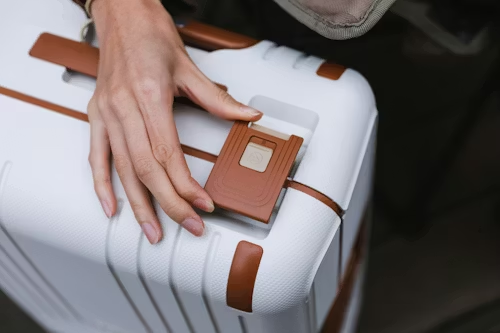
Si eres vendedor de Amazon, un comprador de regalos corporativos, o una marca de moda que prueba una línea de equipaje por primera vez, ODM es tu mejor amigo. En el mercado mayorista de equipaje, La velocidad a menudo vence a la singularidad..
La velocidad de comercialización es fundamental
Con ODM, La fábrica ya ha hecho el trabajo pesado.. Han probado la estabilidad de la calota. Han equilibrado el asa del carro.. La línea de producción está lista para funcionar.. En teoría, puedes volar a la sala de exposición de una fábrica., Señale un equipaje de mano de policarbonato., elige un color pantone, envía tu logo vectorial, y comenzar la producción en unas semanas.
Ahorros de costos significativos
La mayor ventaja aquí es evitar el costo de herramientas.. Eso $15,000 hubieras gastado en moldes? Puedes poner eso directamente en marketing o inventario.. para una startup, que la liquidez es un salvavidas.
Sin embargo, recuerda la compensación. Podrías ver “su” bolso vendido por otra marca en un país diferente. Si su objetivo es la estricta singularidad de la marca, ODM tiene un techo de cristal. Pero para la producción de artículos de viaje, donde necesitas validar un mercado rápidamente, es el movimiento más inteligente.
¿Cuánto tiempo lleva realmente la producción de equipaje??

Esta es la pregunta que mantiene despiertos a los compradores. “¿Recibiré mis acciones antes de las vacaciones??” Siempre les digo a mis clientes: La gestión de la cadena de suministro consiste en ampliar su cronograma. Nunca creas en un “mejor escenario” fecha. Aquí está el desglose realista de cómo fluye el tiempo en nuestra industria..
La línea de tiempo del OEM: El juego largo
Si sigues la ruta personalizada, la paciencia es una virtud.
- Diseño & Paquete tecnológico (15-30 días): Usted y los ingenieros de la fábrica finalizan los dibujos en 3D..
- Creación de moldes (45-60 días): Este es el “caja negra” período. Se está cortando acero. No se puede apresurar.
- Pruebas de muestra (15 días): Sale la primera muestra. Rara vez encaja perfectamente. Se hacen ajustes.
- Producción en masa (45-60 días): Una vez que el “Muestra dorada” está firmado.
Total: estas mirando 4 a 6 meses antes de que los productos estén listos para enviarse.
La línea de tiempo de ODM: El carril expreso
Aquí es donde brilla el equipaje de marca privada.
- Selección & Herrada (7 días): Tú eliges el modelo y envías el arte..
- Muestra de preproducción (7-15 días): La fábrica fabrica una unidad con su logo para su aprobación..
- Producción en masa (30-45 días): Ya que los moldes están listos, La producción comienza inmediatamente después del depósito..
Total: Podrías estar listo para enviar 2 a 3 meses.
Para propina: Independientemente del camino, nunca te saltes la muestra de preproducción (PPP). He visto compradores intentar ahorrar $200 omitiendo la muestra final, sólo para descubrir que 1,000 las maletas tienen el logo impreso al revés. El PPS es tu contrato.
La verdad sobre los costos de herramientas y los MOQ
hablemos de dinero. Específicamente, ¿Por qué los fabricantes de maletas insisten en cantidades mínimas de pedido? (Moqs). Muchos nuevos compradores se frustran cuando una fábrica dice, “La cantidad mínima de pedido es 500 piezas.” ellos preguntan, “¿No puedes simplemente hacer 50?” para entender la respuesta, hay que mirar la propia línea de producción.
La verdadera razón detrás de las cantidades mínimas de pedido (Moq)
Inyección en molde (para equipaje duro) o corte de tela (para equipaje blando), el tiempo de configuración es enorme.
Detener una máquina para cambiar el color de los pellets de plástico, purgando la boquilla, y calentar un molde nuevo lleva horas. Si solo pides 50 bolsas, La fábrica pierde dinero con solo encender la máquina..
- MOQ de OEM: Generalmente más alto (a menudo 1,000+ piezas por modelo). Como no estás usando moldes compartidos, la fábrica necesita una tirada más grande para justificar la dedicación de la línea de producción a sus especificaciones únicas.
- MOQ de ODM: Generalmente más bajo (puede ser 300-500 piezas). Dado que la fábrica podría estar ejecutando este mismo shell para otros tres clientes, A veces pueden combinar compras de materiales o espacios de producción..
El cálculo del retorno de la inversión
¿Cuándo tiene sentido pagar tus propios moldes?? Mi regla general es: Volumen. Si planeas vender más de 5,000 Unidades de un modelo específico durante dos años., el costo de abrir un molde (amortizado sobre 5,000 unidades) se vuelve insignificante, tal vez $2 o $3 por unidad. a cambio, obtienes un producto que es 100% tuyo.
Cómo elegir un fabricante de maletas y garantizar la calidad
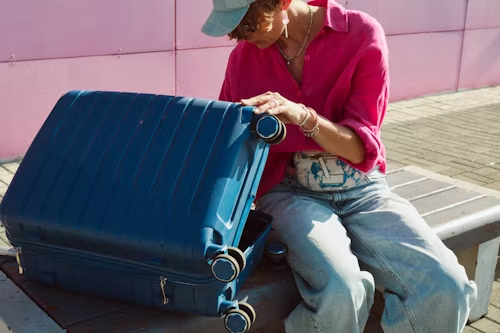
Ya sea que esté buscando un bolso de cuero fabricante que se expande hacia artículos de viaje o una fábrica de equipaje dedicada, el proceso de investigación es el mismo. No te fijes sólo en el precio. Busque los sistemas que tienen implementados..
La lista de verificación de auditoría
Una fábrica confiable debe ser transparente.
- Certificaciones: ¿Tienen ISO? 9001 para gestión de calidad? ¿Tienen un informe BSCI de cumplimiento social?? Estas no son solo insignias; Te dicen si la fábrica está dirigida profesionalmente o si es una fábrica clandestina..
- Proveedores de componentes: Pregúntales de dónde sacan sus ruedas.. Los fabricantes de primer nivel suelen trabajar con marcas de ruedas de renombre como Hinomoto o proveedores locales equivalentes de alta calidad.. Si son vagos sobre las partes, ten cuidado.
Pruebas: Los no negociables
No se puede juzgar una maleta mirándola. hay que torturarlo. Cualquier fábrica que valga la pena debería tener un laboratorio de pruebas interno.. Cuando evalúo una ejecución de producción, Exijo ver informes para:
- La prueba de caída: Cargar el estuche con 20-25 kg y dejarlo caer desde 90 cm en todas las esquinas.. Si la cáscara se rompe, falla.
- La prueba del tirón del mango: Levantar la bolsa cargada por el asa 5,000 veces.
- La prueba de kilometraje: Hacer rodar la bolsa sobre una superficie rugosa durante 20-30 km..
Si un proveedor potencial dice, “No te preocupes, nuestra calidad es buena,” pero no puedo mostrarte el vídeo de una bolsa aplastada contra el suelo., eso es una bandera roja. La calidad son datos, no es una promesa.
¿Qué camino de fabricación se adapta a su negocio??
Hemos recorrido mucho terreno. Entonces, ¿Cómo decides?? no hay “mejor” opción, sólo la opción que se adapta a tu realidad empresarial actual.
Elija OEM si:
- Eres una marca establecida con seguidores leales..
- Tienes una característica de diseño específica que resuelve un problema de usuario. (P.EJ., un compartimento para portátil accesible desde el exterior).
- Tienes el presupuesto para los honorarios del molde. ($15k+) y puedo esperar 6 meses para el lanzamiento.
- Proteger su IP es su máxima prioridad.
Elija ODM si:
- Estás probando un nuevo concepto o iniciando una nueva marca..
- Necesita entregar su efectivo rápidamente (velocidad de comercialización).
- Tu presupuesto es más ajustado, y quieres gastar dinero en marketing en lugar de moldes.
- Estás de acuerdo con vender un diseño estándar., diferenciando por color, logo, y la historia de marketing.
La verificación final de la realidad
La estrategia es fácil sobre el papel; La ejecución es donde se pierde o se gana el dinero.. Puedes tener los dibujos OEM perfectos, pero si su fábrica toma atajos en el grado de policarbonato o se salta la prueba de fatiga del mango, tu marca recibe el golpe, no de ellos.
Precisamente por eso la transición del diseño al producto terminado requiere algo más que un proveedor.; requiere una pareja obsesionada con los detalles. En SIN VOTO, Llevamos los meticulosos estándares de costura de un tradicional fabricante de bolsos de cuero a la precisión industrial del equipo de viaje.. Es esta fusión única de artesanía y una ingeniería rigurosa que separa las fábricas genéricas de los principales fabricantes de equipaje.
Ya sea que esté listo para invertir en moldes personalizados o necesite una solución de marca privada de alta calidad que no parezca “barato,” Estamos aquí para asegurarnos de que su producto físico coincida con la promesa de su marca..
Contáctenos hoy, y analicemos cómo darle vida a su colección de equipaje.
Preguntas frecuentes (Preguntas frecuentes)
1. hacer la parte superior 10 Los fabricantes de equipaje utilizan OEM u ODM.?
La mayoría de los líderes de la industria global utilizan una combinación estratégica de ambos modelos.: Utilizan OEM para sus diseños emblemáticos exclusivos y ODM para lanzamientos estacionales más rápidos.. Su éxito se basa en un estricto control de calidad y no sólo en poseer fábricas., que analizamos en profundidad en nuestra guía de arriba 10 fabricantes de equipaje.
2. ¿Puedo patentar el diseño de una maleta si uso ODM??
No, Porque la fábrica conserva los derechos de propiedad intelectual sobre el diseño del molde.. Puede proteger su marca y logotipo, pero no puedes impedir legalmente que otros vendan la misma forma de bolso. Poseer la patente de diseño., Debes elegir la ruta OEM..
3. ¿Qué puedo personalizar exactamente en un ODM? (Etiqueta privada) maleta?
Si bien no se puede cambiar la forma estructural del caparazón, Tienes control total sobre la estética.. Normalmente puedes personalizar el color de la carcasa., forro interior, estilos de cremallera, y ubicación del logotipo para que coincida con la identidad de su marca.
4. ¿Necesito un Tech Pack para empezar a fabricar??
Para proyectos OEM, Sí; un Tech Pack actúa como modelo esencial para que los ingenieros construyan sus moldes personalizados. Para ODM, Por lo general, solo necesita proporcionar los archivos de su logotipo vectorial y sus códigos de color Pantone preferidos, ya que el diseño ya existe..
5. ¿Por qué el coste de la muestra es tan alto para el equipaje??
Las fábricas cobran una prima por las muestras porque interrumpir una línea de producción en masa para ensamblar manualmente una sola unidad es muy costoso.. Sin embargo, Los fabricantes de renombre generalmente tratan esto como un depósito y deducirán la tarifa de la muestra de la factura final del pedido al por mayor..